


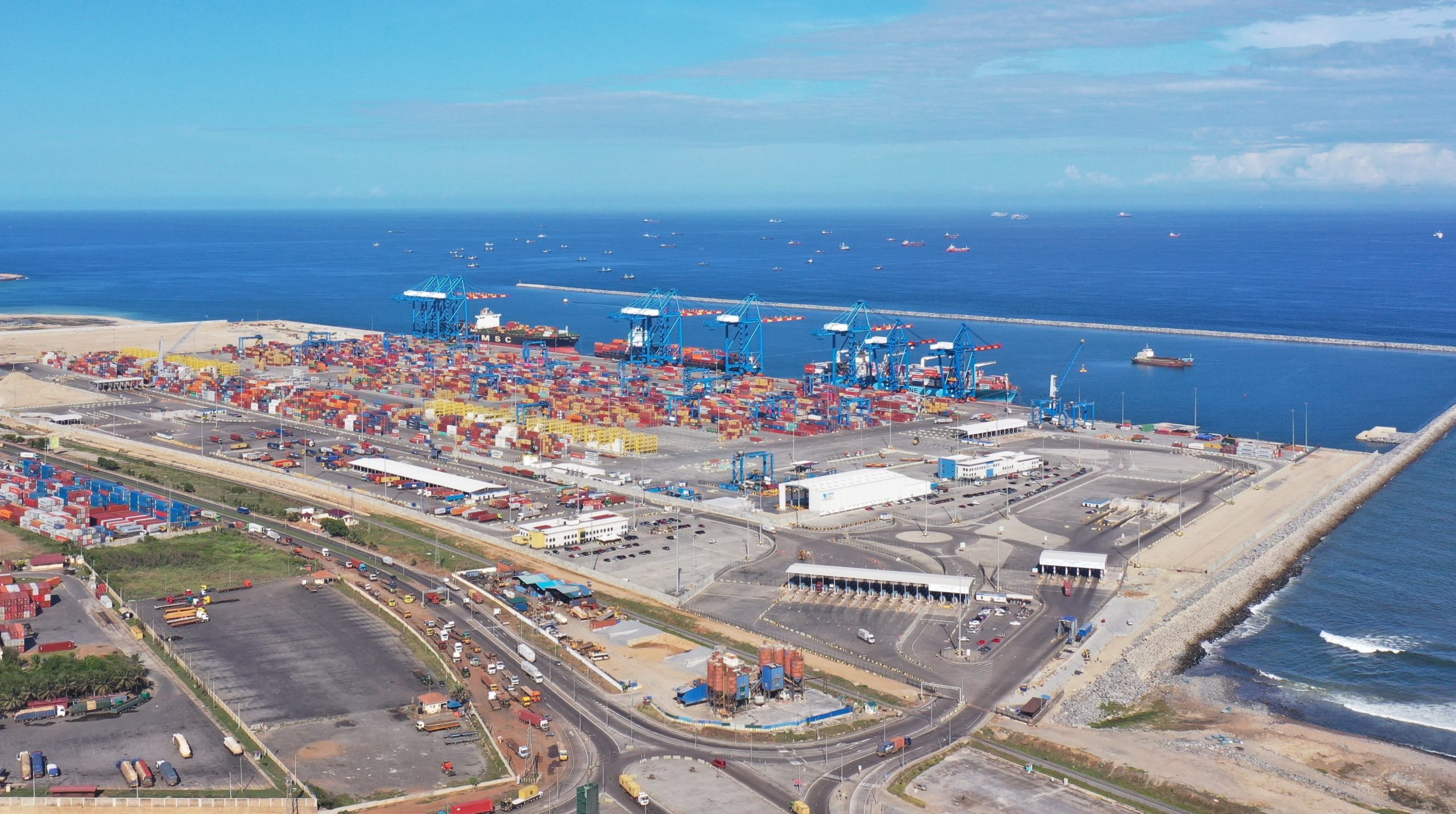
The Commissioner-General of the Ghana Revenue Authority (GRA), Anthony Sarpong, has disclosed that Ghana lost more than GH¢11 billion in revenue due to under-declaration and other irregularities at the country’s ports.

Speaking on Joy FM’s Super Morning Show on Friday, April 10, Mr Sarpong described the extent of the losses as alarming, following a comprehensive review of data spanning the past five years.
“This is very significant. When we took office, we did a study of past data over about five years, and the results were very revealing,” he said.
According to him, the losses were primarily linked to incorrect declarations relating to country of origin, misclassification of goods, and undervaluation.
“We identified that over GH¢11 billion in revenue was lost to the state because of issues relating to country of origin, misclassification and valuation,” he stated.
Mr Sarpong also revealed that investigations uncovered collusion among key actors within the import chain, including shipping line staff, customs officers, and some importers.
“We found that there was some collusion among shipping line staff, customs officers and some importers, and this is how the scheme was being run,” he explained.
He noted that the heavy reliance on human discretion within the system made it difficult to detect and prevent such practices, prompting the introduction of the Publican AI system.
The AI-driven system, he said, is designed to reduce human interference and improve the accuracy of duty assessments by analysing declarations in real time.
“The use of AI automation… looking at country of origin, classification and valuation, gives us the opportunity to detect issues ahead of time,” he said.
Mr Sarpong further addressed claims that Ghana loses about $3 million daily at its ports, confirming that the figure is now supported by data generated through the new system.
“This is the revelation after introducing Publican. It is Publican that has given us this insight,” he noted.
Providing details, he said the system analysed over 6,000 import declarations in February alone. While 75 per cent were within acceptable limits, the remaining 25 per cent flagged discrepancies, translating into an average daily revenue risk of about $3 million.
“That under-declaration, if we had not brought in Publican, we would not notice all of it,” he said, adding that the figure could rise to between $3 million and $3.5 million daily during busier months.
He estimated that unchecked irregularities could result in more than GH¢1 billion in revenue losses each month.
Beyond revenue mobilisation, Mr Sarpong emphasised that the system would also promote fairness in the business environment by eliminating the advantage enjoyed by non-compliant importers.
“Those who under-declare are not paying the right taxes, and they gain a pricing advantage over compliant businesses,” he explained.
He added that enforcing compliance across the board would level the playing field and reduce market distortions, ultimately benefiting legitimate traders and the broader economy.


