


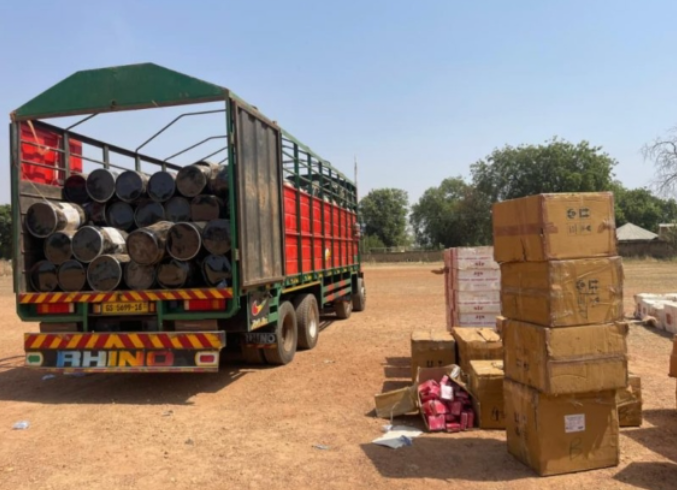
The Upper West Regional Command of the Narcotics Control Commission (NACOC) has intercepted two Kia Rhino trucks transporting unapproved substances, including sodium cyanide, foreign cigarettes and pharmaceutical products, at Kaleo in the Nadowli District of the Upper West Region.

The consignments, which were reportedly bound for Burkina Faso, were being conveyed in vehicles with registration numbers GS 5699-18 and GC 1871-11. A search uncovered 58 cartons of cigarettes, 182 cartons of unapproved pharmaceutical drugs and 40 drums of sodium cyanide.
According to officials, the operation was carried out on Sunday, February 1, 2026, following intelligence indicating that the trucks were heading toward the border with the illicit cargo. Subsequent inspections revealed that the items were being transported without the required documentation or regulatory approval.
The drivers and their assistants have since been handed over to the Ghana Police Service Upper West Regional Command for further investigations and possible prosecution.
Authorities say investigations are ongoing to determine the source and intended recipients of the consignments.
About Sodium Cyanide
Sodium cyanide is a highly toxic industrial chemical capable of causing death within minutes of exposure. Once it enters the body, it interferes with the ability of cells to use oxygen, effectively leading to internal suffocation even when a person continues to breathe normally.
Exposure can occur through ingestion, inhalation or skin absorption, and may quickly trigger symptoms such as dizziness, breathing difficulty, seizures, cardiac arrest and, in severe cases, death. Because even small quantities can be fatal, the chemical is subject to strict regulation worldwide.
Despite its dangers, sodium cyanide has legitimate industrial applications when handled under controlled conditions. It is commonly used in gold mining to extract gold from ore, as well as in electroplating, metal processing and certain chemical manufacturing processes.
However, its production, transportation, storage and disposal are governed by stringent national and international safety standards due to the risks it poses to human health and the environment. Companies that use sodium cyanide are typically required to obtain licences, adhere to strict handling protocols and comply with environmental protection regulations to prevent accidents and misuse.


