


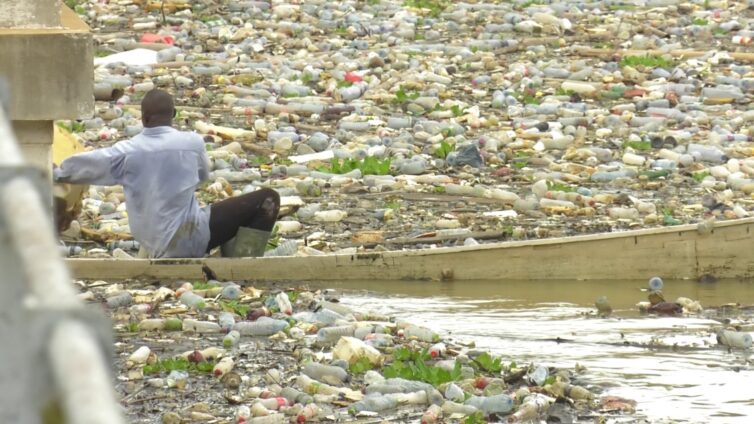
Water security in Ghana’s Ashanti Region is under increasing strain as two major treatment facilities supplying the Greater Kumasi metropolis face severe siltation and plastic pollution, according to the Ghana Water Company Limited.

The Owabi Treatment Plant is reported to be approximately 75 per cent clogged with fine sand and plastic waste, while the Barekese Dam—the largest water source in the area—has lost about 40 per cent of its storage capacity due to silt accumulation.
Officials warn that without urgent dredging and stronger protection of water catchment areas, thousands of households could face significant water shortages within the next two years, particularly if climate variability intensifies.

The Owabi facility, which produces roughly three million gallons of potable water daily, is increasingly affected by pollution in its source reservoir. Once clear, the water body has become heavily contaminated, turning murky due to plastics and suspended sediments. This has compelled workers to undertake frequent clean-up operations to maintain supply.
Dr Hanson Mensah-Akutteh, Chief Manager for the Ashanti Production Region at Ghana Water Limited, expressed concern over the dwindling usable water levels, noting that current reserves may not be sustainable in the event of prolonged dry conditions.
At Barekese, although the water appears clearer, heavy siltation continues to reduce its effective capacity. The utility attributes the problem largely to human activities, including settlement expansion, farming, and deforestation along the catchment areas, which accelerate soil erosion into the water bodies.

Management cautions that continued environmental degradation could severely disrupt water supply across Kumasi. Dr Mensah-Akutteh warned that prolonged drought conditions in the coming years could leave the metropolis facing acute shortages.
During a working visit, the Managing Director of Ghana Water Limited, Adam Mutawakilu, described the situation as critical, noting that water extraction from deeper sections of the Barekese reservoir is no longer feasible.
He indicated that funding has been earmarked for dredging operations, with a request submitted to the Ministry of Finance for approval. Once authorised, the intervention is expected to restore capacity at the affected sites.
In the interim, a dedicated national security task force is expected to be deployed to the reservoirs to prevent further encroachment and protect the integrity of the water sources.


