


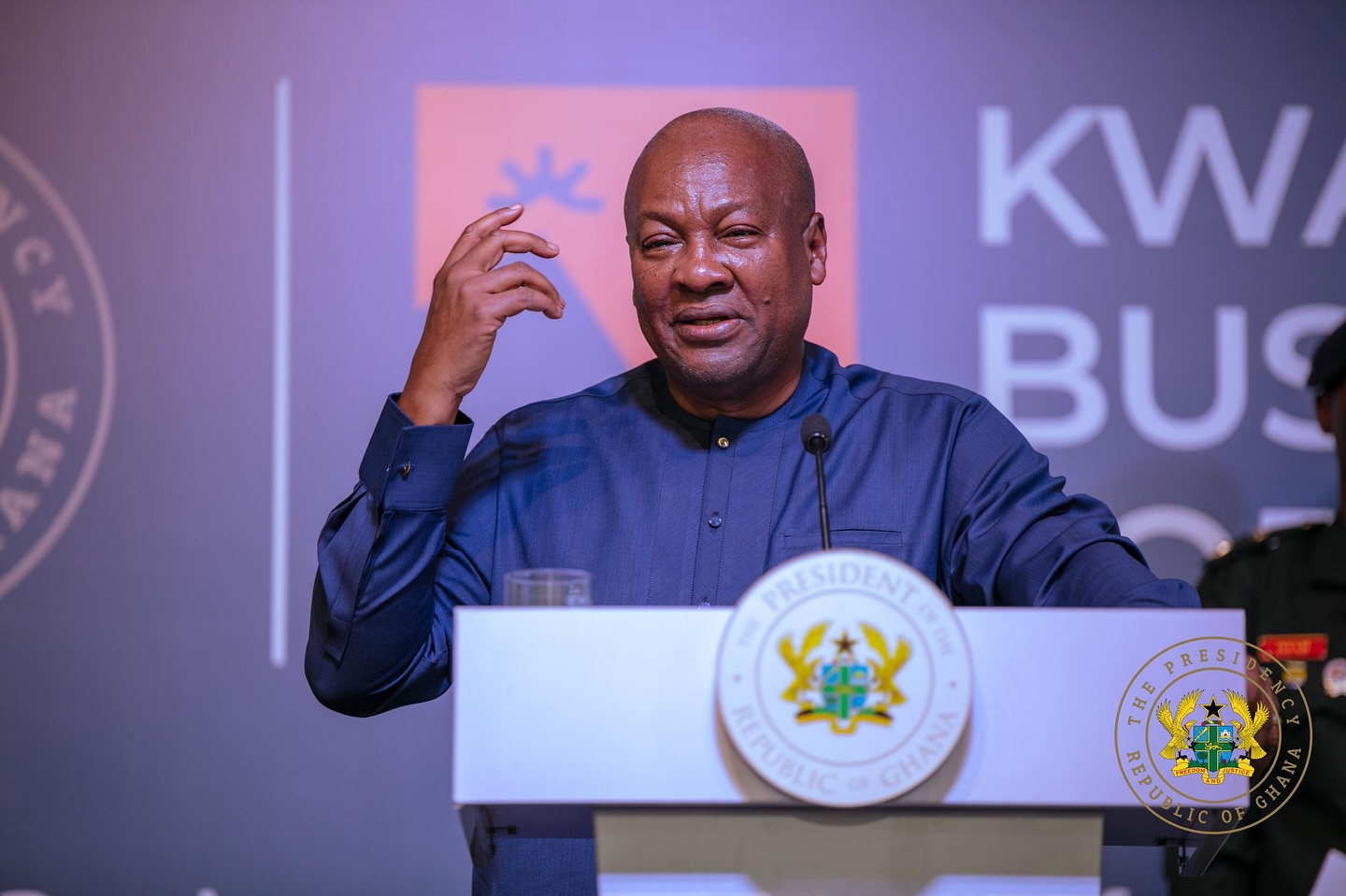
President John Dramani Mahama has backed plans to boost the prosecutorial mandate of the Office of the Special Prosecutor (OSP) as the court battles over its powers continue.

Addressing the 2026 May Day rally in Koforidua, Eastern Region, the President noted the issue was now with the judiciary but insisted the anti-graft agency can still be given teeth to work.
“While some of the issues are pending appeal and Supreme Court interpretation, the government believes that there is space for an effective Office of the Special Prosecutor with special powers of prosecution.”
His remarks follow an ongoing legal fight on whether the OSP can pursue corruption cases on its own, a question currently awaiting court interpretation.
This comes after a recent High Court judgment that doubted the OSP’s ability to independently bring criminal charges, stating such authority lies constitutionally with the Attorney-General.
The ruling has since been appealed, with the Supreme Court set to decide. The OSP was set up in 2017 to probe and prosecute corruption offences, especially involving public officers, and to act with some independence from political influence. The continuing legal clash, however, has sparked concerns over the scope of its prosecutorial reach and its strength in driving anti-corruption action.
Earlier, the Trades Union Congress (TUC) Ghana Chairman, Bernard Owusu, urged a tighter connection between Ghana’s recent macroeconomic steadiness and concrete gains in workers’ welfare, insisting that stability means little without real impact.
He said May Day remained a “proud moment in the life of every worker,” devoted to celebrating labour’s dignity and renewing the shared pledge to build a fair and thriving nation.
He commended government’s work to bring back macroeconomic stability, calling the progress a vital base for national advancement.
Yet, he said Ghana’s next development stage must focus on expansion, employment, and lasting livelihoods.“Your Excellency, we acknowledge the effort made to restore macroeconomic stability. These gains are important, and they provide a foundation for progress. For without the Ghanaian worker, there is no economy, and there is no nation,” he said.
Mr Owusu emphasised that economic stability should now lead to better living standards for people, mainly through quality jobs and stronger social safety nets. He expressed hope that the current administration would give inclusive growth the immediate focus it requires.
The TUC Chairman also underscored the role of key areas like energy and agriculture in driving economic growth, cautioning that gaps in these sectors could derail national gains.“When energy fails, industry slows. When industry slows, jobs suffer. And when jobs suffer, families feel the pain,” he warned.
He called on policymakers to fortify these sectors to secure resilience, job security, and long-term economic sustainability for workers and their households.


