


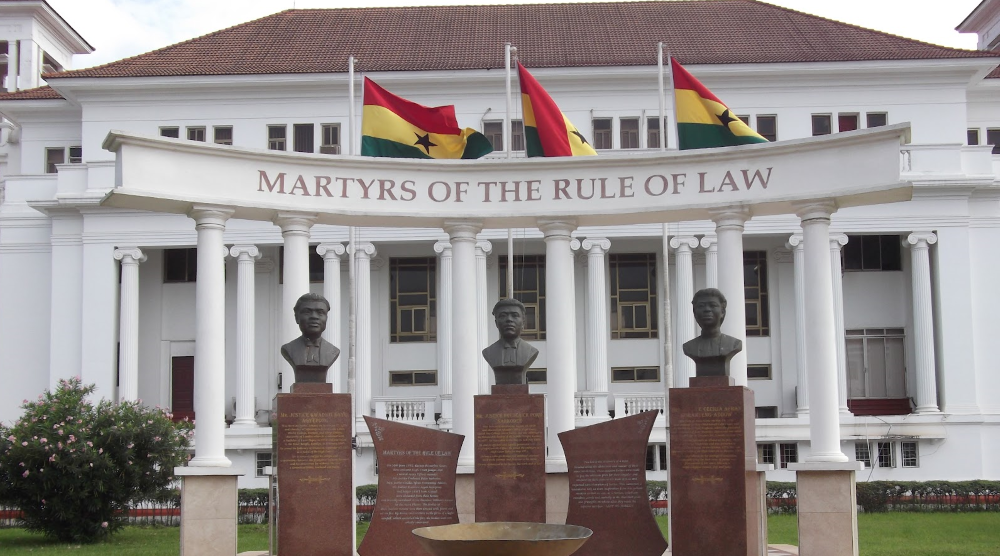
Fourteen civil society groups have petitioned the Supreme Court for permission to participate in a case contesting the constitutional validity of Ghana’s anti-corruption legislation, the Office of the Special Prosecutor Act, 2017 (Act 959), calling it a matter of significant public importance.

“The Applicants take this opportunity to emphasise that their intervention is not partisan, adversarial, or personal to any party before the Court,” the statement said.
“It is motivated solely by a shared commitment to constitutionalism, accountable governance, anti-corruption, institutional integrity and the preservation of independent public institutions established to serve the Republic.
”The groups include the Ghana Centre for Democratic Development, Transparency International Ghana, Ghana Anti-Corruption Coalition, IMANI Africa, Democracy Hub, STAR-Ghana Foundation, NORSAAC, Penplusbytes, ACEP, Odekro, A Rocha Ghana, Parliamentary Network Africa, One Ghana Movement, and Africa Education Watch.
The coalition states that several members played an active role in drafting and advocating Act 959 in 2017, including consultations with Parliament’s Constitutional, Legal and Parliamentary Affairs Committee. They contend that this past involvement provides them with institutional insight that could aid the Court in understanding the statute.
The civil society bodies are requesting to be admitted as amici curiae—friends of the court—so they can offer legal and policy input without becoming direct litigants. They also praised the Supreme Court for what they termed its increasing willingness to involve civil society in constitutional cases.
“The Court’s openness to structured civil society engagement in constitutional adjudication has, in recent years, enriched the deliberative record before it,” the statement noted, adding that this reflects “a maturing of constitutional practice in Ghana.
”Should the request be approved, the coalition says it will support the Court with comparative anti-corruption benchmarks, institutional assessment, and wider public interest perspectives relevant to the proceedings.
The applicants are being represented by a legal team comprising Kizito Beyuo Esq., Oliver Barker-Vormawor Esq., Samson Lardy Anyenini Esq., and Clement Kojo Akapame Esq.


