


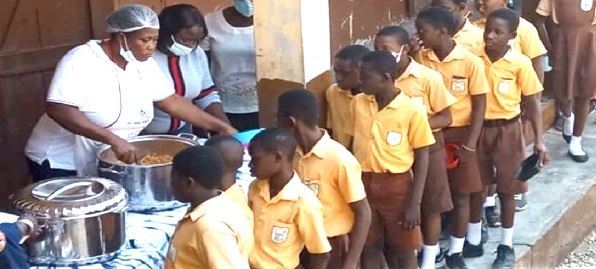
Thousands of pupils in the Krachi East Municipality risk disruption to the Ghana School Feeding Programme as cooks and caterers threaten to suspend meal preparation over months of unpaid allowances.

The cooks, who prepare daily meals for pupils in public basic schools across the municipality, say they have continued working despite not receiving payment for several months.
Madam Mariama Adisah and several other cooks explained that they have relied on personal savings and loans to sustain the programme while struggling to support their own families.
“We have been patient for too long; some of us borrowed money just to continue cooking for the children because we know many of them depend on the meals. If the money is not paid soon, we will have no option but to stop,” Madam Adisah said.
The cooks stated that repeated engagements with caterers over the delays have produced only assurances without any actual payments.
They have now issued what they describe as a final ultimatum, warning that they will withdraw their services if the outstanding allowances are not paid immediately.
Some caterers, who spoke on condition of anonymity, also revealed that they have not received financial support from the government since joining the programme.
According to sources, the prolonged delay in releasing funds has placed severe financial pressure on both caterers and cooks, many of whom have resorted to loans, personal savings, and credit purchases to keep the programme operational.
The caterers said repeated assurances from authorities have not translated into payments, making it increasingly difficult to continue operations.
“We have been using our own money to support the programme because we did not want the children to suffer, but things have become extremely difficult. Traders and suppliers are refusing to give us food items on credit because previous debts are still unpaid,” they explained.
According to the caterers, rising food prices and transportation costs have further worsened the situation, making the programme financially unsustainable without urgent government intervention.
Many disclosed that they are already indebted to local traders and financial institutions after borrowing money to purchase rice, beans, cooking oil, fish, and other ingredients used in preparing school meals.
They warned that unless funds are released urgently, several caterers may be forced to suspend cooking activities entirely — a development they fear could disrupt academic activities and negatively affect thousands of pupils who depend on daily meals under the programme.
The caterers are therefore appealing to the government, the Ministry of Gender, Children and Social Protection, and the National School Feeding Secretariat to expedite the release of funds to prevent a complete breakdown of the programme in the municipality.


