


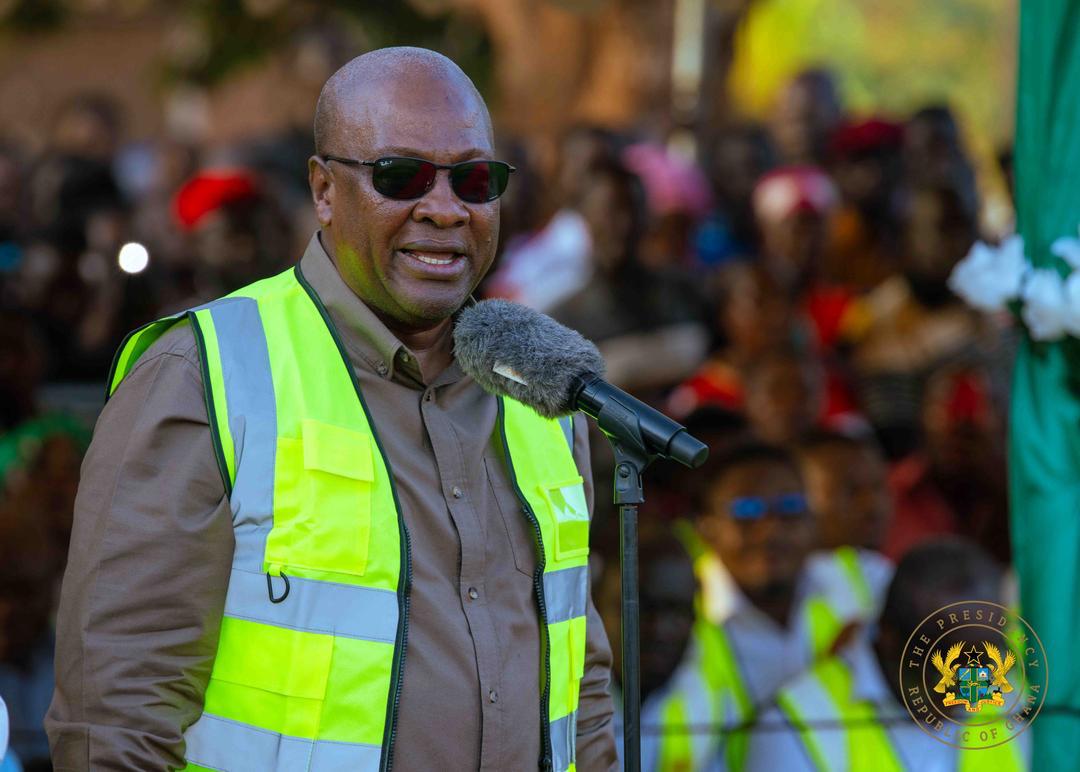
President John Dramani Mahama has ordered National Disaster Management Organisation (NADMO) flood task force and other key state bodies to compile a full report on Ghana’s flooding crisis following recent inundation in parts of the country, with Accra worst affected.

The President said the report will help government pinpoint major flood hotspots, including blocked waterways, to guide urgent and long-term fixes for the persistent problem.
He gave the instruction on Tuesday, June 9, 2026, at Accra International Airport after returning from an official trip to Belarus. His comments follow widespread flooding in several communities, as heavy, sustained rains battered Accra and other areas.
President Mahama noted that this year’s downpours, which started in May and continued into June, have been more severe than in past years, triggering major disruption in hit communities.
He also flagged human actions fueling the crisis, especially structures built on waterways and other at-risk zones. Questioning how some of those projects got permits, he called for stronger accountability in planning and development approvals.
“But some of the houses have building permits. How did they get them? So we have to do some soul-searching,” he said.
He insisted authorities must act tougher to stop further encroachment on waterways and flood-prone areas.President Mahama urged state agencies to break the cycle of only reacting to floods, cautioning against waiting for disaster before acting.
“We shouldn’t be like the vulture who says he will repair his roof when the rain stops,” he said, adding that government must pursue lasting remedies, not quick fixes.
The President tasked NADMO and allied agencies to work together to map all restricted waterways nationwide and roll out corrective steps once the review is done. He also highlighted public sensitization on flooding and environmental care, urging the Government Communications Department and other bodies to scale up awareness drives.
According to President Mahama, strict enforcement, public education, and better infrastructure planning together will be vital to cut flood risks and avert future crises.


