


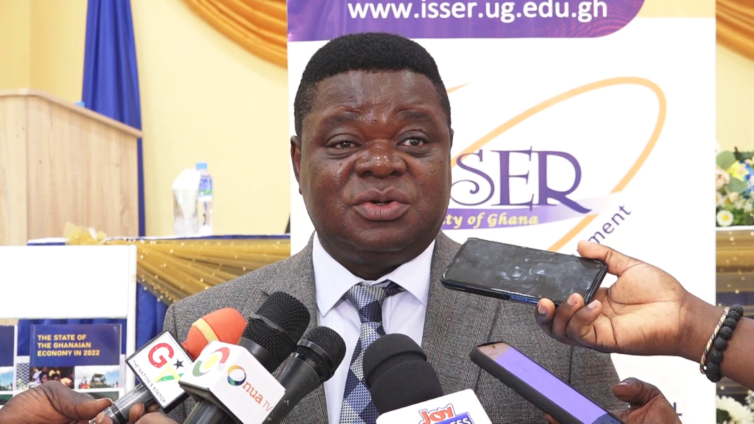
Economist Professor Peter Quartey has supported the Bank of Ghana’s (BoG) decision to maintain the policy rate at 14%, citing rising global oil prices and persistent inflationary risks.

He said the decision was appropriate given the uncertainty surrounding the global economic environment and the potential impact of higher energy costs on Ghana’s economy.
“Well, it’s certainly a good move because if you look at the threats to our macro economy, you realise global oil prices have been going up and are likely to go up,” Prof Quartey said.
Speaking on the outlook for oil prices, he said uncertainty remained high and could pose additional risks to the economy.
“We’re not sure what the near end is going to look like,” he said.
Prof Quartey also pointed to rising costs facing households and businesses, including higher utility charges and fuel prices.
“And inflationary threats are there, and you’ve seen utility increases, we’ve seen increases in fuel prices at the pump, etc.,” he said.
Against this backdrop, he described the decision to keep the policy rate unchanged as appropriate.
“So it is just laudable, or it’s just ideal that you maintain the rate,” he said.
Balancing inflation and business costs
Prof Quartey acknowledged that the Bank of Ghana could have considered increasing the policy rate in response to global economic pressures.
“It’s quite a difficult one. I mean, if you really want to look at what is happening globally, you may want to hike the rate,” he said.
However, he cautioned that an increase could place additional pressure on businesses by raising the cost of borrowing and doing business.
“But that would not be ideal for businesses, would not be ideal for the cost of doing business,” he added.
According to Prof Quartey, maintaining the rate gives the central bank an opportunity to monitor developments in the global and domestic economy before making its next policy decision.
“And therefore, the bank is taking the approach of basically to watch the space a little bit and see how it comes out, and then we’ll take a decision,” he said.
He ultimately endorsed the decision to maintain the policy rate at 14%.
“But I think it’s certainly in the right direction,” Prof Quartey said.


