


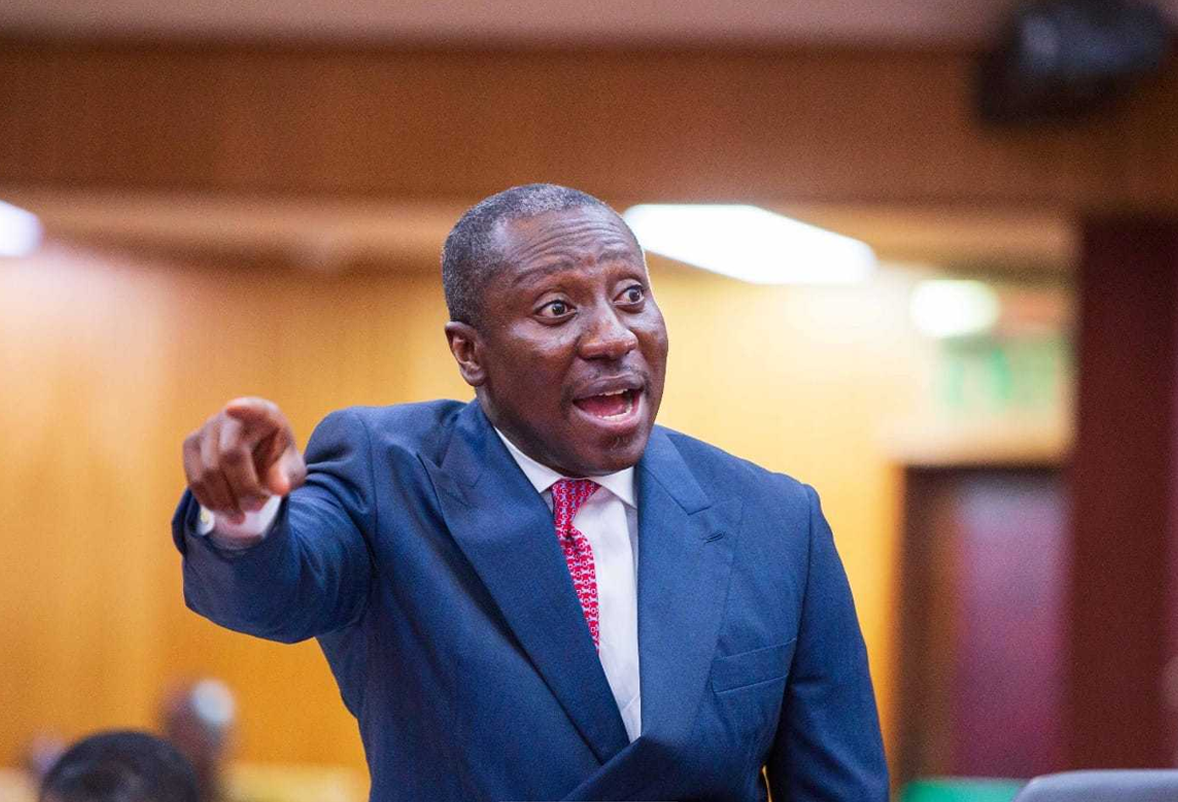
Minority Leader Alexander Afenyo-Markin has warned that Ghana risks losing a generation of young people to drug abuse, calling for urgent action to address the impact of narcotics trafficking on communities.

Ghana has been linked to several major international narcotics seizures in recent months, including the interception of approximately 3.9 tonnes of cocaine at the Port of Dunkirk in France.
The cocaine was reportedly concealed in a consignment of plastic waste shipped from Ghana.
Speaking at a press briefing ahead of Parliament’s resumption on Tuesday, November 3, 2026, Mr Afenyo-Markin said the proliferation of illicit drugs threatened the health and future of young people, destroyed families and undermined national productivity.
“The proliferation of illicit drugs threatens the health and the future of our young people. It destroys families, undermines productivity, and places an increasing burden on our healthcare and social welfare systems. We risk losing a generation of young people whose potential should be contributing to the development of our country,” he said.
He stressed that the consequences of drug trafficking extended beyond national security concerns and Ghana’s international reputation, urging the country to confront the impact of narcotics entering local communities.
“Beyond the implications for national security and our international reputation, we must also confront the devastating consequences of narcotics finding their way into our communities,” he said.
The Minority Leader said the fight against drug trafficking should be a collective national responsibility and called for accountability from institutions mandated to protect the public.
“This is why the fight against narcotic drug trafficking must concern every Ghanaian and why the institutions entrusted with protecting our society must be held accountable,” he added.
Minority pushes for parliamentary inquiry
Mr Afenyo-Markin said parliamentary scrutiny of institutional and regulatory weaknesses that may have facilitated drug trafficking was necessary and consistent with Parliament’s constitutional oversight responsibilities.
“It is against this background that we the Minority consider parliamentary scrutiny of these institutional and regulatory matters both necessary and consistent with Parliament’s constitutional oversight responsibility,” he said.
The Minority has argued that a parliamentary inquiry would examine the performance of public institutions and weaknesses in the country’s drug enforcement systems, rather than interfere with ongoing criminal proceedings.
The caucus has filed a motion seeking a review of Speaker Alban Bagbin’s ruling, which declared inadmissible its proposed parliamentary inquiry into drug trafficking through the country.
The motion is expected to be considered by the House as Parliament resumes its sittings.


