


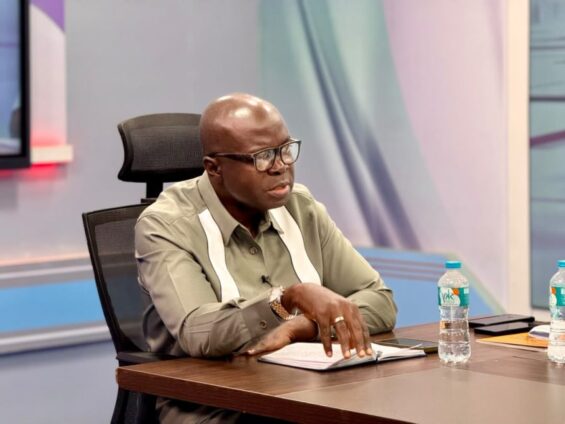
The government’s proposed financing arrangement for the 24-hour economy programme could face significant pressure in 2027 if revenue targets are not achieved, the Member of Parliament for Manso Nkwanta, Tweneboa Kodua Fokuo, has cautioned.

He said the government’s plan to create fiscal space for the initiative relies largely on anticipated future revenue rather than resources currently available.
According to the MP, this raises concerns about the sustainability of the programme, particularly against the backdrop of a projected slowdown in economic growth in 2027.
Speaking on Joy News’ PM Express on Tuesday, November 10, ahead of the presentation of the 2027 Budget by Finance Minister Dr Cassiel Ato Forson, Mr Fokuo warned that a shortfall in revenue mobilisation could undermine the government’s ability to finance the initiative.
“It’s not as if we have the money at hand now. No, we don’t have the money now,” he said.
He explained that the proposed financing arrangement appeared to depend on reducing the primary surplus target from 1.5 per cent to 0.5 per cent, thereby creating additional fiscal space for expenditure on the programme.
However, he questioned the reliability of this approach, noting that the anticipated fiscal space would depend on revenue that government was yet to generate.
Mr Fokuo further pointed to projected economic growth figures, which indicate a slowdown from 6.2 per cent in 2026 to 4.9 per cent in 2027, arguing that the weaker growth outlook could affect revenue mobilisation.
“If you look at revenue that has been generated this year, even when the economy is growing at 6.2 per cent, versus 2027 that we are projecting to slow down to 4.9, what it means is that we are likely to struggle in terms of revenue for 2027,” he said.
He consequently questioned the source of funding for the proposed economic programme if government failed to meet its revenue projections.
“If we do struggle for 2027, then you ask yourself where would the funding for the new economy really come from?” he asked.
Financing concerns
The Manso Nkwanta MP also criticised the initial financing strategy for the 24-hour economy programme, arguing that government failed to put adequate risk-management measures in place to encourage private sector participation.
He said the absence of a clear framework to address the risks associated with investing in the initiative contributed to the private sector’s reluctance to participate.
“When the private sector did not jump on board as was expected, because it was just a slogan, it was just a pronouncement, but nothing was done to really manage the risks thereof, the private sector had no interest,” he said.
Mr Fokuo described the government’s current financing approach as a repackaging of the original programme, with public funds expected to assume a more prominent role in its implementation.
His comments come ahead of the presentation of the 2027 Budget, which is expected to outline the government’s economic priorities, revenue projections and financing arrangements.
The budget is expected to provide further clarity on how government intends to fund the 24-hour economy programme, mobilise private sector investment and ensure that its development commitments are backed by sustainable revenue sources.


