


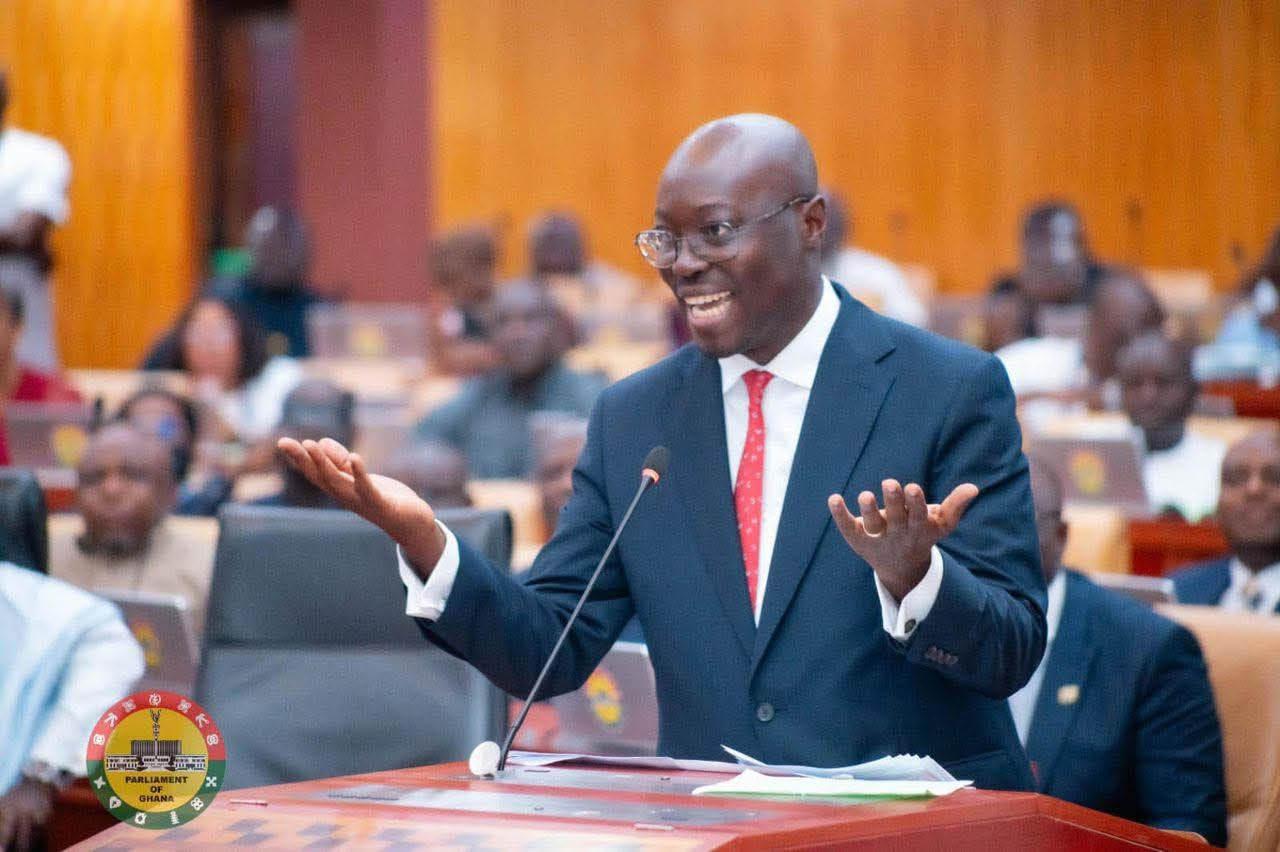
The Minister of Finance, Cassiel Ato Forson, has announced a GH¢30 billion investment in the New Economy programme next year to expand businesses, boost exports and create jobs.

He made the announcement while presenting the 2027 Budget Statement and Economic Policy to Parliament on the evening of Thursday, November 12.
According to him, the investment will lay the foundation for the country’s economic transformation and support government’s development priorities.
He said the funding will be sustained over the 2027-2030 period, with government seeking to finance its transformation agenda without compromising macroeconomic stability or reversing gains made in stabilising the economy.
To ensure accountability, Ato Forson said all projects under the programme will go through rigorous appraisal and value-for-money assessments.
He added that government expenditure will be properly budgeted, authorised and transparently reported, with public resources directed to strategic assets and projects that deliver broader benefits.
A significant share of the investment will go into commercial agriculture, which government has identified as a key driver of growth, employment and export expansion.
“Next year, we will invest GH¢30 billion into the New Economy. This will finance the foundation for the economic transformation needed to expand businesses, increase exports and create jobs for the Ghanaian people.
Out of the US$10 billion equivalent, US$3 billion of that amount will be invested in Pillar Two, Commercial Agriculture,” he said.
He noted that the sector’s contribution goes beyond farming to include transportation, processing, packaging, trade and other rural services.
Despite its importance, the Finance Minister observed that Ghana still spends billions of dollars importing food and agricultural products that could be produced competitively in the country.
He warned that dependence on such imports puts pressure on the cedi, exposes the economy to external price shocks and limits opportunities for local businesses and communities.
Ato Forson argued that reducing avoidable food imports would create opportunities across the agricultural value chain, from financing farmers and reviving factories to generating transport contracts and employment.
“Every avoidable import is more than a customs entry into our country. It is a farm that was not financed, a factory that remained idle, a transport contract that was never signed and a job that was created elsewhere,” he told Parliament.


