


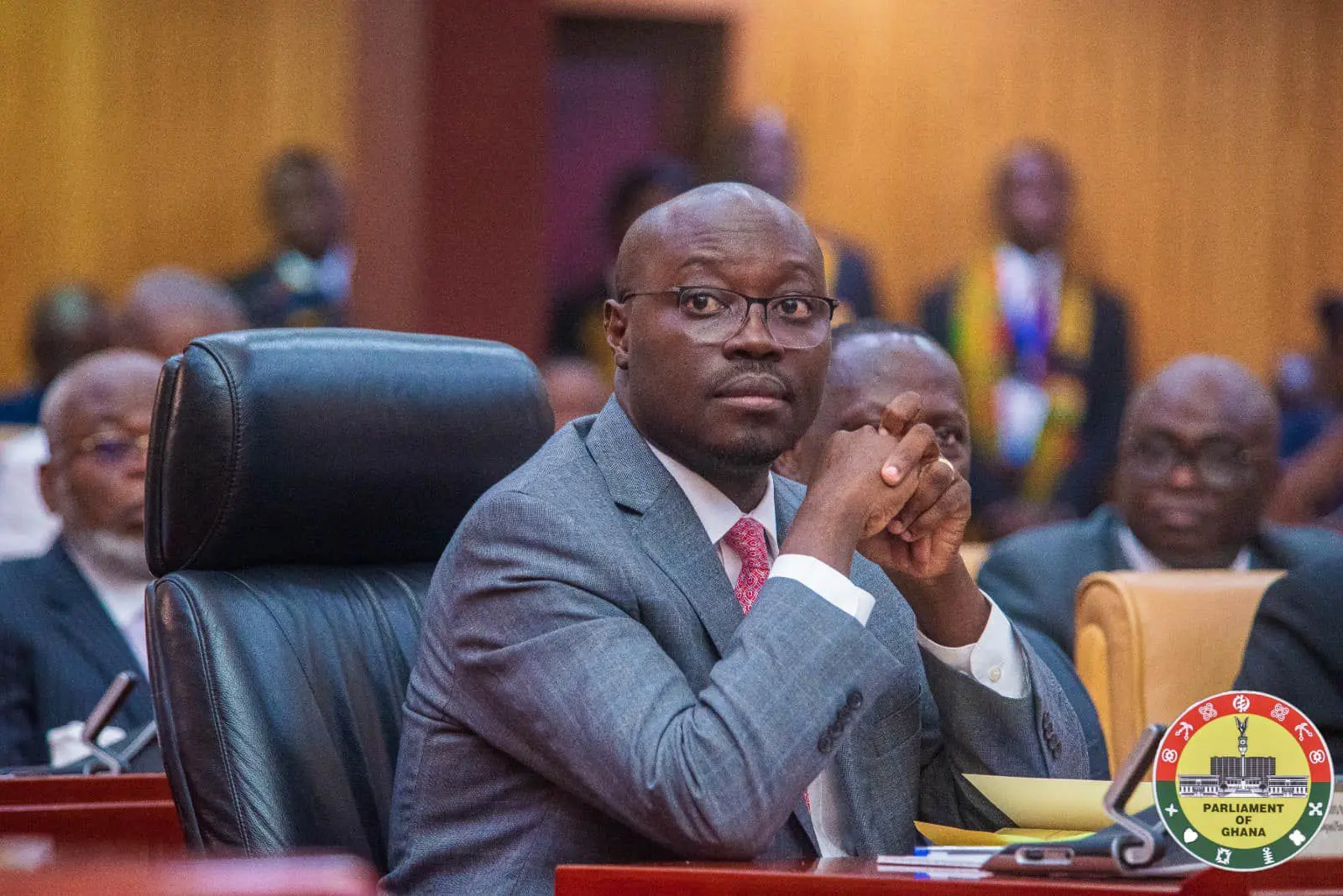
Speaking in an interview on Thursday after presenting the 2027 Budget to Parliament, the minister described the situation as a potential national crisis requiring urgent government intervention.
“As we speak, 1.34 million Ghanaians, young people, are neither in employment, education, nor training. We call them the NEET. 1.34 million people. This is a bomb waiting to explode,” he warned.
Dr Forson cautioned that the figure could increase to approximately 1.7 million within the next four years if decisive measures were not implemented, warning that the long-term implications could affect the country’s economic and social stability.
He identified the government’s New Economy agenda as a central part of its strategy to address the challenge by restructuring the economy and directing investments towards sectors with significant job-creation potential.
“Our approach is to use this new economy to change the structure of the economy and invest in eight areas. This is where the jobs are,” he explained.
The minister’s comments came amid discussions about the government’s decision to ease its primary surplus target in 2027 following two years of fiscal consolidation.
Defending the adjustment, Dr Forson recalled that Parliament had approved a primary surplus target of 1.5 per cent of Gross Domestic Product (GDP) for 2025, but the government exceeded the target by achieving 2.5 per cent.
He described the additional one percentage point as a deliberate effort to strengthen Ghana’s fiscal credibility and restore confidence in the country’s economic management.
“In 2025, the anchor, as approved by Parliament, was for me to do 1.5% of GDP primary surplus. I did 2.5% of GDP, and I said to the world that that is our down payment for policy credibility,” he stated.
Dr Forson argued that the additional fiscal adjustment created room for the government to adopt a less restrictive approach in 2027 without undermining economic stability.
“So we saved 1% of GDP. Taking back 1% in 2027 would not harm the economy,” he said.
He characterised the government’s earlier fiscal consolidation measures as “shock therapy”, arguing that they had helped achieve economic stabilisation within two years, a process he suggested could otherwise have taken considerably longer.
With the economy moving towards stability, the Finance Minister said the government’s attention must now shift towards addressing structural challenges, particularly the growing number of young people excluded from employment, education and skills development.
He maintained that the New Economy agenda, through targeted investments in eight priority sectors, would provide a pathway to expand employment opportunities, strengthen productive industries and address Ghana’s youth unemployment challenge.


