


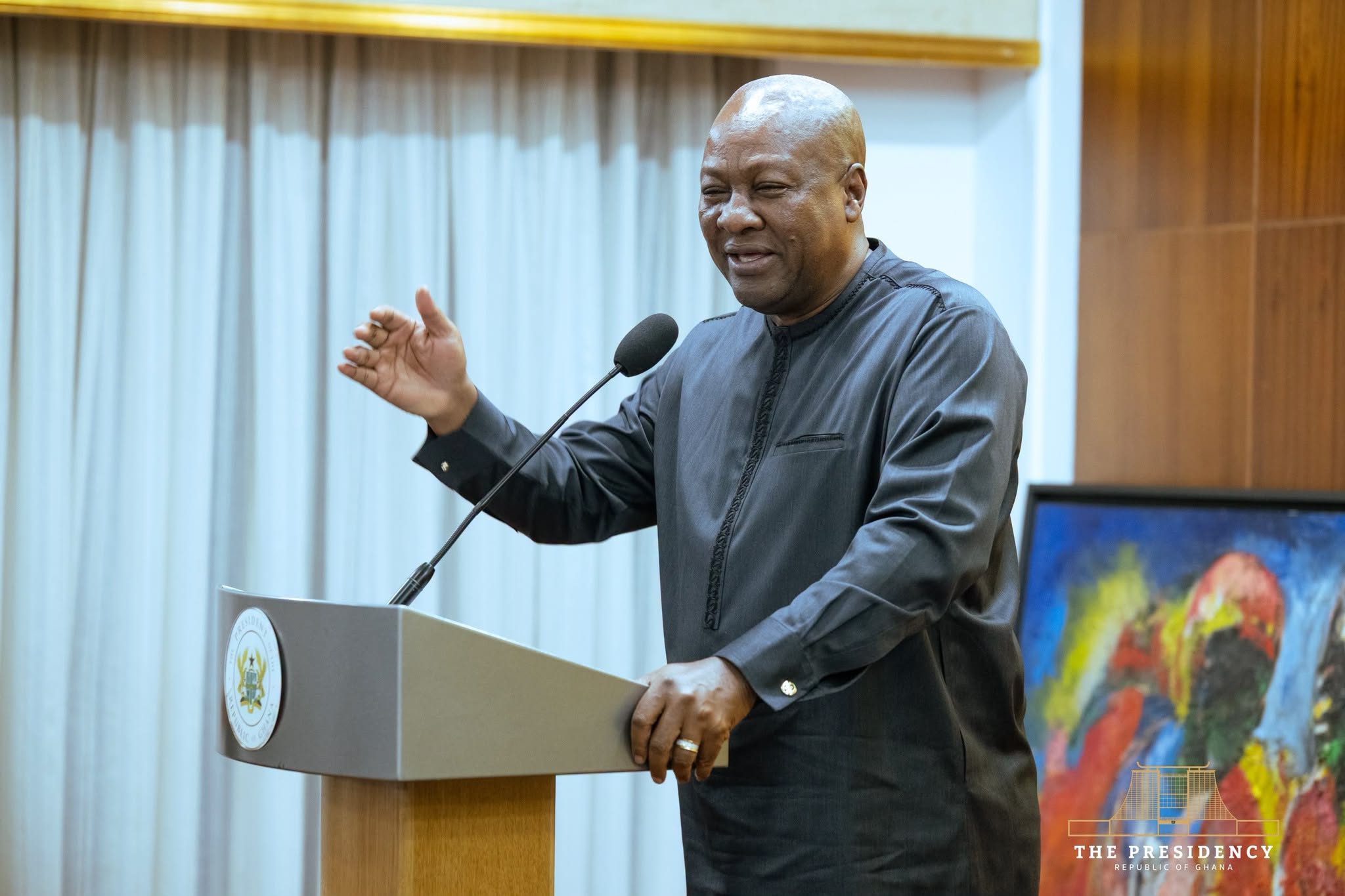
President John Mahama has expressed the government’s readiness to engage the University Teachers Association of Ghana (UTAG) and the Ghana Tertiary Education Commission (GTEC) to resolve disagreements over the regulation and administration of tertiary institutions.

The President said the proposed engagement would seek to establish a balance between regulatory oversight and the autonomy and academic independence of universities.
He made the remarks during a meeting with UTAG at the Presidency, where he acknowledged the tensions between the association and GTEC and cautioned against excessive regulatory interference in the internal administration of universities.
President Mahama maintained that although regulatory oversight was necessary to ensure standards and accountability, it should not undermine the independence of tertiary institutions.
“It’s a very fine balance between overreach and regulation. And so we must see where to draw the line so that we maintain the autonomy and academic independence of our tertiary institutions, but at the same time, have the regulator carry out its duties,” he said.
He assured the association that government was prepared to facilitate dialogue between the two parties to find an acceptable resolution.
“So we are ready to dialogue and engage to see how we can resolve the issues between you and the leadership of GTEC,” he added.
For her part, UTAG National President, Professor Vera Ogeh Fiador, said the association’s concerns were rooted in what it considers an erosion of university autonomy and an expansion of GTEC’s regulatory powers into the day-to-day management of tertiary institutions.
She argued that while UTAG recognises the importance of quality assurance and regulatory supervision, the Commission must exercise its mandate in a manner that respects the authority of university governing councils and the independence of academic institutions.
“What we have seen over the period is a removal of university autonomy, the powers of councils, and overreach that results in the regulator getting into the affairs of the day-to-day management of the universities,” she stated.
Professor Fiador stressed that UTAG was not opposed to regulation but wanted a framework that enables universities to carry out their academic responsibilities without undue administrative interference.
“What we seek is a regulatory environment that is enabling and helps us to achieve national development in the best interests of all,” she added.
The disagreement between UTAG and GTEC has largely centred on the Commission’s regulatory approach, particularly what the association describes as interference in university governance, institutional autonomy and administrative decision-making.
UTAG has previously questioned the exercise of GTEC’s regulatory powers and called for changes to the Commission’s leadership.
The President’s offer to facilitate dialogue is expected to provide an opportunity for both parties to address their concerns and establish clearer boundaries between regulatory oversight and university autonomy.


