


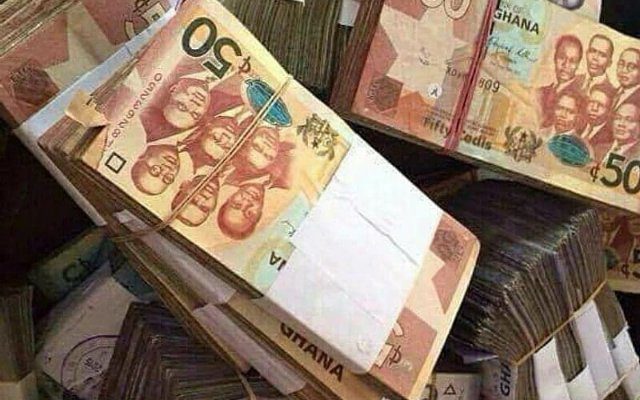
Former Tamale Metropolitan Chief Executive, Iddrisu Musah Superior, has criticised the removal of the Big Six from Ghana’s redesigned banknotes, describing the decision as politically motivated and warning that it could undermine the country’s historical heritage.

He has also called on a future New Patriotic Party (NPP) administration to restore the images of the six independence figures to Ghana’s currency, arguing that national history should not be altered to reflect the political preferences of successive governments.
In an opinion piece responding to the redesigned Ghanaian cedi notes, Mr Musah Superior questioned the decision to remove the established representation of the Big Six, comprising Dr Kwame Nkrumah, J.B. Danquah, Ebenezer Ako-Adjei, Edward Akufo-Addo, Emmanuel Obetsebi-Lamptey and William Ofori Atta.
He maintained that the historical figures represented on Ghana’s currency form part of the country’s collective national identity and should not be displaced because of changes in political leadership.
“The Big Six is not the property of any political party. They are part of Ghana’s national story,” he stated.
Mr Musah Superior warned that the decision could signal the emergence of a political culture in which successive governments attempt to redefine national symbols and historical representations to reflect their ideological interests.
He argued that allowing political considerations to influence the representation of national history could weaken historical continuity and turn Ghana’s heritage into a subject of partisan competition.
“The NDC government must understand that winning an election does not confer ownership of the country’s historical narrative. Electoral victory grants a political administration the mandate to govern within the constitutional order; it does not grant it the authority to redefine the country’s collective memory according to partisan convenience,” he wrote.
While acknowledging the Bank of Ghana’s responsibility for currency redesign and modernisation, the former MCE insisted that such changes should not come at the expense of established national symbols.
He suggested that additional historical personalities could be recognised without removing those who have already been honoured.
“A confident nation adds to its history; it does not selectively subtract from it,” he said.
He further urged the Bank of Ghana to provide a clear historical justification for the changes and facilitate a broader national conversation on the preservation of Ghana’s heritage.
According to him, currency modernisation should prioritise security, efficiency, durability and innovation without creating the perception that the country’s historical identity is being subjected to partisan revision.
Looking ahead to a possible change in government, Mr Musah Superior said he would strongly recommend that the next NPP administration restore the traditional representation of the Big Six on Ghana’s banknotes.
“And let it be clearly stated: when the New Patriotic Party returns to government, the traditional representation of the Big Six should be restored to Ghana’s currency, subject to the necessary institutional and technical processes,” he stated.
He emphasised, however, that any restoration should not be motivated by political retaliation or an attempt to diminish the contributions of other national figures.
“Not as an act of revenge, not to erase anybody else’s contribution, but as a reaffirmation that national heritage must be protected from the changing political preferences of successive governments,” he added.
Mr Musah Superior concluded by stressing that Ghana’s history belongs to all citizens and should be protected from partisan interference.
“Governments will come and go. Presidents will change. Political parties will win and lose elections. But Ghana must remain Ghana, with its history intact, its heritage respected, and its national identity protected,” he said.


