


By Juliet Akosua Danquah

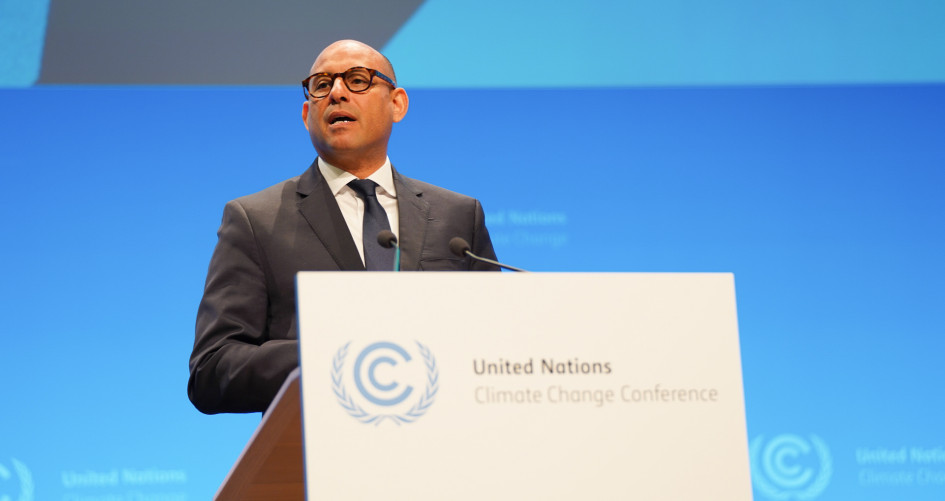
AI can either accelerate climate action or deepen the climate crisis, UN Climate Change Executive Secretary, Simon Stiell, warned on Monday, November 16, at COP31, Antalya, Turkey.
Speaking at the High-level Green Digital Action Roundtable on AI, Mr Stiell said frontier technologies like AI carry great potential and great peril.
“AI and other frontier technologies are a double-edged sword. The task ahead is to blunt their dangerous edges, sharpen their catalytic ones, and put these technologies responsibly to work,” he said.
He therefore warned that cleaning up the electricity grid alone will not solve the problem and that unchecked heating will hit the very economies tech companies depend on.
“Taking fossil fuels off the grid does not take their emissions out of the atmosphere and unchecked global heating would destroy the economies on which AI companies depend,” he said.
He called directly on CEOs and boards to step up and align their business and investment plans with global climate goals.
“The UN Paris Agreement is the only way to prevent an economic and human trainwreck that would crush every company in every sector, including big tech. So, all firms should set credible climate targets and deliver on them,” Mr Stiell said.
He also warned that the energy transition was already moving at two speeds, with developing countries left behind.
“The energy transition already risks moving at two speeds. AI must help to close that divide. That means tackling the barriers developing countries face, access to finance, computing capacity and reliable data,” he said.
Tanzanian Innovator Wins AI for Climate Action Award
Later in the day, UN Climate Change celebrated the winner of the AI for Climate Action Award 2026, showcasing locally driven AI innovation helping developing countries respond to climate change.
Upendo Ernest Lyimo from Tanzania won the award for CLIMAID, an AI-powered platform that combines climate data, satellite observations and local vulnerability information to support early warning, adaptation planning and climate risk management.


