


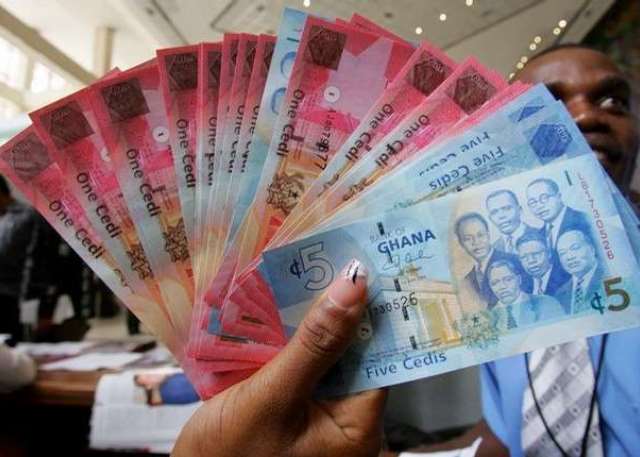
The Ghana cedi is facing renewed pressure, with its year-to-date depreciation against the US dollar rising to 10.6 per cent in November 2026, compared with 9.5 per cent recorded in September.

The latest Bank of Ghana Summary of Economic and Financial Data indicates that the US dollar traded at GH¢11.69 on the interbank market in November, marginally higher than the GH¢11.66 recorded in September.
The local currency has also weakened against other major international currencies, including the British pound and the euro, raising concerns about foreign exchange supply and the sustainability of its recent performance.
According to the Bank of Ghana’s figures, the cedi recorded depreciation of 9.2 per cent against the pound and five per cent against the euro on the interbank market.
Fitch projects further depreciation in 2027
The pressure on the cedi is expected to continue into 2027, with Fitch Solutions forecasting that the local currency will average GH¢12.40 to the US dollar next year.
The research firm attributes the projected depreciation partly to the possibility of declining international gold prices and the government’s efforts to accumulate foreign exchange reserves.
Associate Director at Fitch Solutions, Mike Kruiniger, explained that both developments could constrain dollar inflows into the domestic market, making it more difficult for the cedi to withstand demand pressures.
“We expect to see the currency to weaken a little bit, and that is going to bring back some important price pressures next year,” he said.
Mr Kruiniger also pointed to changes in foreign exchange intermediation involving the Bank of Ghana and the Ghana Gold Board, warning that the developments could further tighten dollar supply.
He explained that lower gold earnings, combined with the government’s reserve accumulation efforts under the Ghana Reserve Accumulation Programme, could limit the availability of foreign exchange in the domestic market.
He further cautioned that a stronger US dollar could exert downward pressure on international gold prices, potentially reducing Ghana’s export earnings.
Implications for inflation and businesses
Gold remains one of Ghana’s major sources of foreign exchange, making the performance of the international gold market particularly important to the stability of the cedi.
A sustained decline in gold prices could reduce the country’s export receipts and limit the dollar inflows available to support the local currency.
Further depreciation would also increase the cost of imported goods and production inputs, potentially raising operating expenses for businesses and putting additional pressure on consumer prices.
Manufacturers and traders who depend heavily on imported raw materials, machinery and finished products are particularly exposed to exchange rate fluctuations.
The projected weakening of the cedi could therefore complicate Ghana’s inflation outlook in 2027, as higher import costs risk feeding into domestic prices and slowing efforts to sustain economic stability.


