


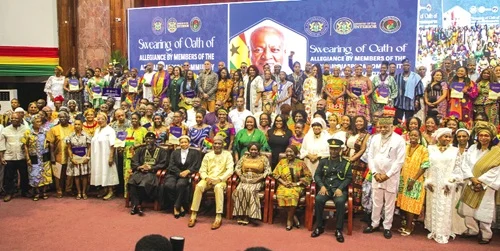
The government has granted Ghanaian citizenship to 155 members of the African diaspora during a ceremony in Accra after they completed the required application and vetting process.

The event was held at the Accra International Conference Centre, where the new citizens took the Oath of Allegiance administered by Circuit Court Judge Annette Sophia Essel.
Certificates of citizenship were presented by the Vice-President, Naana Jane Opoku-Agyemang, with the support of government officials. The ceremony was attended by ministers, members of the diplomatic corps and representatives of diaspora communities.
The initiative forms part of Ghana’s efforts to strengthen ties with people of African descent across the world.
Speaking at the event, Prof. Opoku-Agyemang said granting citizenship to members of the diaspora was more than a legal process, describing it as a recognition of shared identity, history and belonging.
She noted that the ceremony symbolised the enduring connection between Africa and its descendants across the globe despite the historical impact of the transatlantic slave trade.
The Vice-President said Ghana is also leading efforts at the United Nations to have the transatlantic slave trade formally recognised as one of the gravest crimes against humanity.
According to her, the citizenship programme reflects Ghana’s commitment to reconnecting with descendants of Africans whose ancestors were displaced by slavery.
She added that the African diaspora remains a major source of talent, innovation and economic strength, contributing billions of dollars to African economies through remittances, investments and entrepreneurship.
Prof. Opoku-Agyemang said the government is strengthening its Diaspora Engagement Policy to promote investment, entrepreneurship, education and tourism partnerships between Ghana and diaspora communities.
The Minister for the Interior, Muntaka Mohammed-Mubarak, said the ceremony marked the successful completion of a legal process through which individuals with strong ties to Ghana acquired citizenship.
He assured that the Ministry of the Interior Ghana and its partner institutions remain committed to ensuring that the citizenship process remains transparent and consistent with national laws.
Mr Mohammed-Mubarak described the diaspora as Ghana’s “17th region” and Africa’s “sixth region,” noting that their expertise, investments and cultural connections are important to national development.
He also highlighted initiatives such as PANAFEST, Joseph Project, Year of Return and Beyond the Return as part of Ghana’s broader strategy to strengthen engagement with the global African diaspora.
The minister said Ghana will continue to promote citizenship as a way of reconnecting Africa with its global family while building stronger partnerships for the future.


