


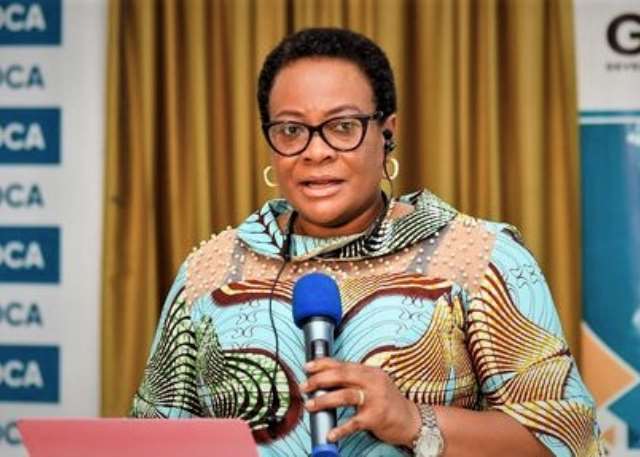
Mary Addah, Executive Director of Transparency International Ghana, is urging Ghanaians to support the Office of the Special Prosecutor (OSP) while demanding greater accountability from the institution.

Speaking on Joy News’ PM Express, Addah cautioned against uncritical public backing of the OSP, led by Kissi Agyebeng. She explained that public trust in such institutions often reflects a broader pattern where citizens rally behind what they perceive as the most viable option available.
“I would want to say that the issue around trust over time has shown that when the citizen believes that the alternative, or what they see as the best alternative, is what is being threatened, then they show up to show that commitment,” she said.
Addah noted that this trend is evident in governance surveys, including corruption barometers and Afrobarometer studies, which consistently show that citizens tend to defend institutions they see as essential, particularly when no credible alternatives exist.
Reflecting on the establishment of the OSP, she recalled the strong public support that drove its creation, describing it as a response to dissatisfaction with existing anti-corruption mechanisms at the time.
“And in the case of the OSP, we had all gone out there on the road to ensure that it was passed, because we thought what existed at the time was not the best for all of us,” she said, adding that exposure to effective anti-corruption models in other countries also influenced that push.
Despite ongoing debates over the OSP’s legal and constitutional grounding, Addah maintained that the institution remains the most viable option for tackling corruption and related offences in Ghana.
“But if we scrap it, what is the alternative?” she asked. “The alternative still remains that the OSP is the only purely anti-corruption institution set up to fight corruption and corruption-related offences, as well as procurement offences.”
She acknowledged that some critics have called for the OSP to be scrapped due to concerns about its constitutional basis, but warned against dismantling it without a clear and effective replacement.
Addah also linked growing public confidence in institutions to increased civic awareness and empowerment, noting that more citizens are now willing to speak out on governance issues.
“People are not afraid anymore, because capacity has been built over time, we have seen citizens empowered, and we have seen citizens begin to speak out more,” she said.
However, she stressed that trust in the OSP must not translate into blind loyalty, urging continuous scrutiny to strengthen the institution’s effectiveness.
“But that is not to say we are just going for it, hook, line and sinker,” she cautioned. “We must also interrogate to see what else can be done to improve the system so that our trust can be enhanced even further.”


