


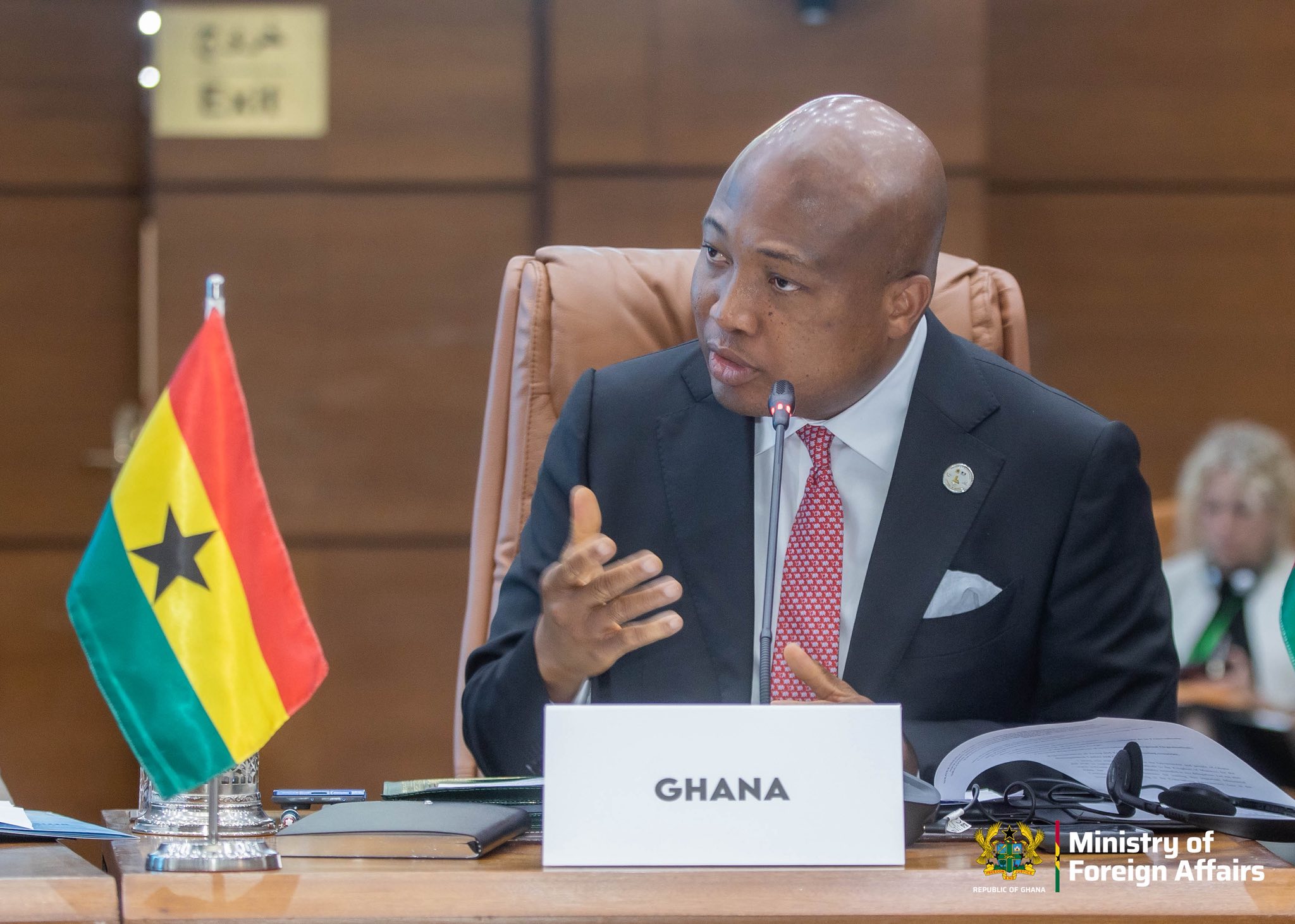
Minister for Foreign Affairs, Samuel Okudzeto Ablakwa, has said the record US$7.8 billion remitted by Ghanaians living abroad in 2025 highlights the critical role the diaspora plays in the national economy and reinforces the need for government to protect citizens facing distress overseas.

Mr Ablakwa made the remarks on Saturday night while receiving the second group of approximately 340 Ghanaians evacuated from South Africa following recent xenophobic attacks.
According to the Minister, the government’s decision to repatriate affected citizens was guided not only by its constitutional obligation to protect Ghanaians wherever they may be, but also by the substantial contribution diaspora communities make to the country’s development.
Diaspora Remittances Strengthen Ghana’s Economy
Remittance inflows to Ghana increased significantly from about US$4.6 billion in 2024 to nearly US$7.8 billion in 2025, making them one of the country’s most important sources of foreign exchange.
At approximately six per cent of Ghana’s Gross Domestic Product (GDP), remittances now exceed foreign direct investment and have become a key pillar of the country’s external sector.
The inflows rank second only to gold exports among Ghana’s major foreign exchange earners.
In 2024, gold exports generated US$11.6 billion, accounting for 57 per cent of total export earnings. Cocoa exports brought in US$1.73 billion despite a significant decline in export volumes, while petroleum exports contributed US$1.36 billion, supported by favourable global prices.
Even at the 2024 remittance level of US$4.6 billion, diaspora inflows surpassed the combined earnings from cocoa and petroleum exports, which totalled US$3.09 billion.
Unlike commodity exports, which are often affected by fluctuations in global prices and production levels, remittances have remained relatively stable, supporting household consumption, education, healthcare and small businesses across the country.
Government Defends Evacuation Effort
Addressing the returnees at Accra International Airport, Mr Ablakwa said the economic importance of the diaspora underscored why government intervention was necessary when Ghanaians abroad face danger.
“Last year, Ghanaians in the diaspora made history. Your remittances amounted to US$7.8 billion according to the Bank of Ghana,” he said.
The Minister dismissed suggestions that public resources should not be spent protecting citizens living outside the country.
“Apart from the fact that we are all Ghanaians and we must look out for each other, the statistics clearly show that Ghanaians abroad are making a major contribution to our national development,” he stated.
He praised members of the diaspora for supporting families and communities back home through regular remittances and other forms of assistance.
“Ghanaians in the diaspora are not selfish. They send remittances home and take care of others back home,” he stressed.
Mr Ablakwa said it was this spirit of solidarity that informed the government’s response to the situation in South Africa.
“If you are in difficulty, in distress, or in trouble, all of us must stand up for you. We must defend you, we must protect you, and we must take you out of harm’s way. That is what we have done,” he said.
Support for Returnees
The Foreign Affairs Minister assured the evacuees that government was working with partners to facilitate their reintegration into Ghanaian society.
According to him, efforts are underway to provide employment opportunities, social support programmes and compensation arrangements for individuals who lost businesses and property during the attacks.
He disclosed that approximately 200 jobs had already been secured through collaborations with Ghanaian companies, entrepreneurs and other stakeholders.
Mr Ablakwa encouraged the returnees to channel their skills, expertise and entrepreneurial experience into Ghana’s economy, noting that new opportunities were emerging as economic conditions improve.
He added that Ghana continues to attract increasing levels of foreign investment due to its political stability and economic prospects.
“The statistics show why we value you. Your contribution to our economy is significant, and Ghana will continue to stand by you wherever you are,” he said.
The latest group of returnees forms part of an ongoing evacuation exercise expected to bring nearly 1,000 Ghanaians back home from South Africa following the recent xenophobic attacks.


