


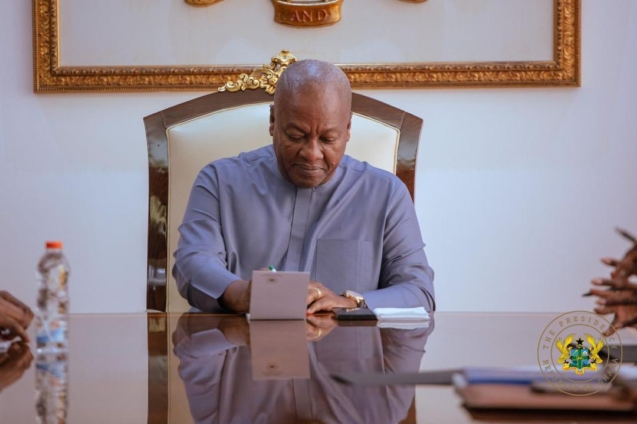
In a decisive move to demonstrate leadership amid rising fuel costs, John Dramani Mahama has imposed a total ban on fuel allowances and coupons for all ministers and senior government appointees.

The directive was announced by Felix Kwakye Ofosu, Minister of State in charge of Government Communications, during an emergency press briefing on Thursday, 9 April 2026, following a high-level Cabinet meeting.
Addressing growing public concern over fuel prices, the President reminded his team that the era of state-funded fuel for personal use is over. The directive, which takes immediate effect, is part of broader efforts to enforce fiscal discipline within the executive arm of government.
“The President took the opportunity to remind all ministers and senior government officials to adhere strictly to his ban on fuel allowances and the allocation of fuel,” Mr Kwakye Ofosu stated, stressing that compliance is mandatory.
To cushion citizens against the rising cost of fuel, Cabinet has also directed the Ministries of Finance and Energy to remove selected taxes and margins on petroleum products. This intervention is expected to lead to a notable drop in fuel prices in the next pricing window, approximately one week from now. The measures will initially remain in place for four weeks, subject to review.
According to the Minister, while Ghana’s economy remains resilient—with inflation reportedly falling to 3.2% and the cedi maintaining stability—external pressures continue to pose challenges. He cited ongoing tensions in the Middle East, particularly disruptions to oil shipments through the Strait of Hormuz, as a key factor driving up global crude prices and insurance costs.
“Cabinet believes a number of steps need to be taken to avert further fallouts,” he noted, adding that the temporary tax relief is intended to provide immediate support to consumers.
In a parallel effort to reduce transportation costs, the government has ordered the rapid deployment of 100 newly acquired Metro Mass buses. These will be deployed along major traffic routes to offer more affordable commuting options, especially during peak hours.
Mr Kwakye Ofosu revealed that this is the first phase of a larger plan, with an additional 200 buses expected by November. The Transport Ministry has been tasked with ensuring that fares on these state-run buses remain significantly lower than those charged by private operators.
Despite current global pressures, the government maintains that fuel prices remain lower than levels recorded during the peak of the Russian invasion of Ukraine. Authorities say the situation in the Strait of Hormuz is being closely monitored, and the tax relief measures will be reassessed after the initial period to determine whether further action is needed.


