


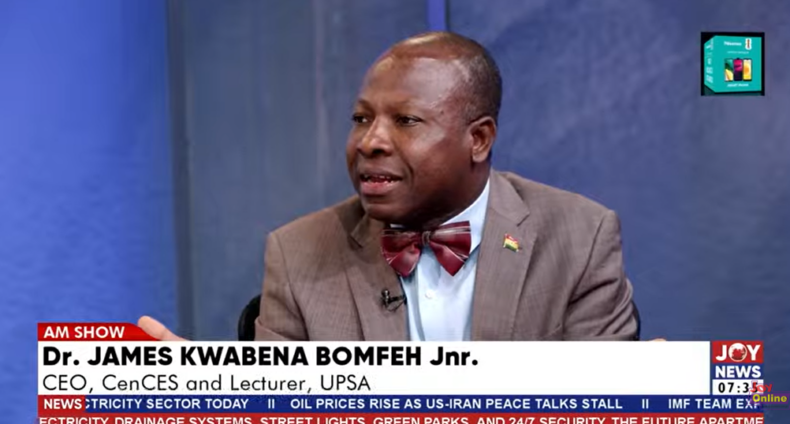
Dr James Kwabena Bomfeh Jnr, a lecturer at the University of Professional Studies, Accra (UPSA) and Chief Executive Officer of the Centre for Climate Change and Energy Security (CenCES), has attributed the latest wave of violence in Mali to broader geopolitical competition in the Sahel, cautioning that external actors are increasingly shaping the region’s security dynamics.

His remarks follow coordinated insurgent attacks on April 25, 2026, targeting multiple military and state installations in Mali, with reports indicating that the country’s Defence Minister was among those killed.
Dr Bomfeh argued that the crisis cannot be fully understood without situating it within the context of international involvement in the region. He suggested that external powers have played a role in recent political developments across Sahelian states, particularly in relation to military takeovers.
“The Russians were believed to have helped all the coup makers in these three countries,” he stated, referring to Mali, Burkina Faso, and Niger.
These countries, currently governed by military regimes, have in recent years distanced themselves from the Economic Community of West African States and pursued alternative security and diplomatic partnerships.
Speaking on the AM Show, Dr Bomfeh characterised the Sahel as an arena of intensifying global rivalry, involving Western powers alongside Russia and China, each seeking strategic influence. He described the situation as reflective of a broader geopolitical contest.
He further cautioned that reliance on external alliances—particularly in the context of counterinsurgency operations, including the involvement of Russian-linked security contractors—risks undermining domestic accountability and long-term stability.
Dr Bomfeh emphasised the need for African states to carefully manage external partnerships to ensure that national interests and sustainable governance are not compromised.


