


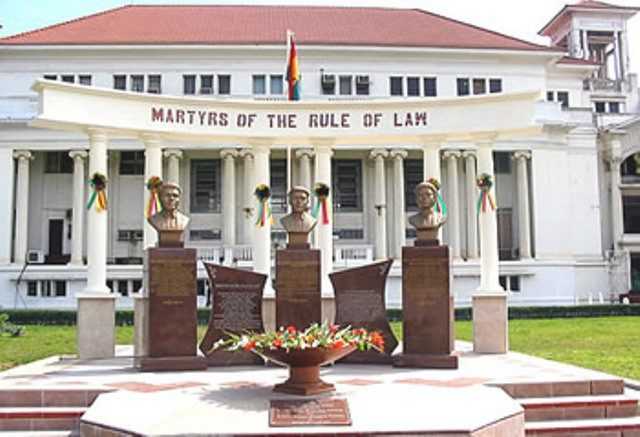
The Supreme Court of Ghana has awarded GH¢800,000 in compensation to Yaw Appiah, a bar owner who spent nearly two decades in prison following a wrongful conviction for robbery.

The landmark ruling, delivered on February 10, 2026, was presided over by Avril Lovelace-Johnson, with a five-member panel that included Henrietta Mensa-Bonsu, Samuel Asiedu, Yaw Darko Asare, and Kweku Tawiah Ackaah-Boafo.
The Court held that Appiah had suffered a miscarriage of justice following his conviction and 45-year sentence in 2011, warranting compensation under constitutional provisions.
Background to the Case
Appiah, a drinking bar owner, was arrested in 2006 at the age of 29 and spent five years on remand before being convicted of robbery in 2011. He was subsequently sentenced to 45 years’ imprisonment.
In March 2025, the Court of Appeal of Ghana acquitted and discharged him, describing the conviction as a “tragedy,” by which time he had already spent approximately 19 years in Nsawam Prison. His acquittal paved the way for a formal application for compensation at the Supreme Court.
Compensation Proceedings
Appiah’s legal team, led by Augustine Obour and Claudia Coleman, filed an application under Article 14(5) and (7) of the 1992 Constitution, seeking GH¢2,020,800 in damages for wrongful imprisonment.
The State, represented by Principal State Attorney Nana Adoma Osei, proposed a significantly lower compensation range of GH¢75,000 to GH¢100,000.
After considering submissions from both parties, the Supreme Court awarded GH¢800,000, determining the amount to be appropriate in light of established legal principles, including guidance drawn from the Dodzi Sabbah case.
Constitutional Basis
The ruling was grounded in Article 14 of the 1992 Constitution. Article 14(5) guarantees compensation for unlawful arrest or detention, while Article 14(7) empowers the Supreme Court to award damages where a conviction is overturned on appeal.
The decision represents a significant judicial pronouncement on wrongful conviction and prolonged imprisonment within Ghana’s legal framework.


