


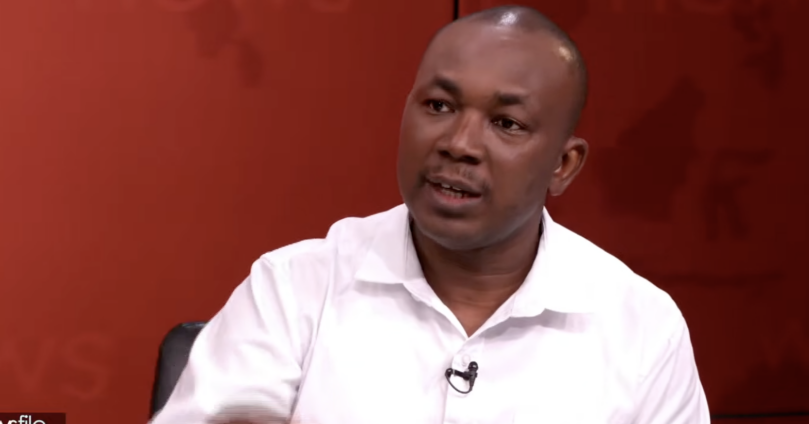
Professor of Finance and Economics at the University of Ghana, Godfred Bokpin, has called on President John Dramani Mahama to make the development of indigenous Ghanaian enterprises a central pillar of his legacy.

Speaking on Joy FM’s Super Morning Show on Thursday, May 21, Prof. Bokpin argued that Ghana’s economic transformation depends on reducing political interference in business support systems and deliberately strengthening local entrepreneurs.
He stressed that governments must move beyond short-term interventions and instead develop long-term sector strategies that enable businesses to scale across Africa and globally.
“I want to appeal to the president that, as part of his legacy, he should have a strategy for key sectors of the economy. We need to interact. Let’s ask, ‘What do you need in the next five to ten years,’” he said.
Prof. Bokpin further noted that many genuine entrepreneurs are discouraged from accessing state support due to political perceptions and fears of being targeted when administrations change.
“In this country, we find examples where genuine entrepreneurs have been scared from taking advantage of government facilities or support because of how they will be tagged,” he said.
He explained that this environment leads some business owners to distance themselves from state programmes to avoid political backlash.
“Once they put the political lens on you, it becomes difficult,” he added.
The economist criticised the politicisation of business development, insisting that state support should be guided by capacity and economic potential rather than partisan considerations.
“Government support must be done in such a way that it is not about whether you are politically affiliated or not,” he said.
According to him, all successful economies deliberately invest in domestic firms to enable them to scale and compete internationally.
“Every business needs government support,” he stated.
Prof. Bokpin warned that Ghana risks slowing its economic progress if support for businesses continues to follow partisan lines.
“We will not go far if we are on this path,” he cautioned.
He further alleged that in some instances, political actors demand ownership stakes in businesses before offering contracts or support.
“We have in this country politicians who, when they are in power, even want to take over businesses of entrepreneurs,” he claimed.
He pointed to Nigeria as an example of how state-backed entrepreneurship can produce regional and continental champions, referencing what he described as the “Obasanjo effect” under former President Olusegun Obasanjo.
“You need that backing,” he said.
Prof. Bokpin also cited countries such as China and France as examples of economies that actively promote and protect national business interests internationally.
He argued that Ghana must adopt a similar long-term strategy to develop globally competitive local firms capable of generating significant wealth.
“I want to see Ghanaian businesses in the top 20 or so when it comes to businesses that are doing very well,” he stated.
He further said Ghana should intentionally build an ecosystem capable of producing high-net-worth entrepreneurs within the next decade and a half.
“I want a system that can raise billionaires and millionaires in the next 15 years,” he said.
According to him, strong indigenous businesses would eventually expand across the continent, similar to the trajectory of Nigerian banks and corporations.
“We must be deliberate. We have to start now,” he concluded.


