


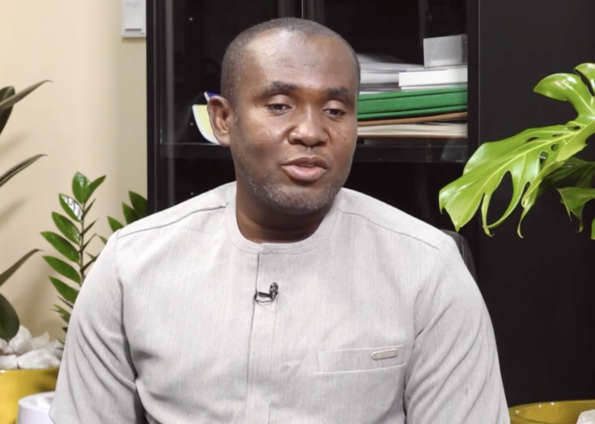
The Executive Secretary of the Public Utilities Regulatory Commission (PURC), Dr Shaffic Suleman, says revenue generated from the GH¢1 levy on petroleum products has played a vital role in reducing Ghana’s energy sector debt and maintaining a stable electricity supply.

Speaking on JoyNews’ PM Express Business Edition, Dr Suleman disclosed that proceeds from the levy have been used to settle long-standing financial obligations owed to independent power producers (IPPs), gas suppliers and other key stakeholders in the energy sector.
According to him, a report from the Ministry of Finance shows that approximately GH¢8 billion has been generated through the levy and deployed to address critical liabilities.
“A report from the Finance Ministry indicates that the ¢1 on petroleum products that was passed has been used. If you see the report, that’s about ¢8 billion,” he said.
He explained that a significant portion of the funds had been used to clear outstanding arrears owed to Independent Power Producers, whose unpaid invoices had placed considerable strain on the country’s power generation system.
“So they’ve used that ¢8 billion to pay off most of the arrears we had not paid—all the arrears from the IPPs. We’ve also used some of it to get back the risk guarantees on the Sankofa Gye Nyame gas production,” he stated.
Dr Suleman further revealed that part of the funds had been used to restore financial guarantees tied to Ghana’s energy agreements, including the World Bank-backed risk guarantee with ENI.
“We’ve also paid off the accumulated debt that was putting Ghana’s credit rating at a very terrible outlook. We’ve paid and restored that World Bank risk guarantee with ENI, so it’s now making Ghana look so good, and our credit rating has also taken shape,” he said.
He added that payments had also been made to gas suppliers under major production agreements, including the Sankofa and Jubilee gas projects.
“I think we’ve also used that amount to pay for the cost of the gas—to the Sankofa partners—and we are also paying the Jubilee Partners Gas Supply,” he noted.
According to the PURC Executive Secretary, these financial interventions have been essential in sustaining electricity generation and preventing power supply disruptions.
“So we are using all that to pay and sustain that part, and that’s actually what is keeping the lights on,” he stressed.
Responding to a question on whether the government’s intervention had significantly reduced the sector’s debt burden, Dr Suleman answered in the affirmative.
“Yes! It has dropped the debt significantly,” he said.
However, he cautioned that the financing challenge facing the power sector is ongoing rather than a one-time obligation.
“Every year, before our lights can be kept on consistently for 12 months, the Ministry of Finance must provide money to ensure that we pay for the cost of all these fuels,” he explained.
Dr Suleman also revealed that, beyond electricity tariffs paid by consumers, the government injects an average of $92 million every month into the sector to sustain power generation.
“So every month, on average, it’s $92 million. As we speak, it’s $92 million. When you see your lights on for 30 days, what it means is that, aside from the tariff we are paying, the Ministry of Finance is also putting in $92 million to make the lights come on,” he said.
His remarks highlight the substantial fiscal burden the government continues to shoulder in supporting Ghana’s energy sector, even as ongoing debt repayments and the restoration of key financial guarantees improve the country’s credit profile and strengthen confidence among international partners.


