


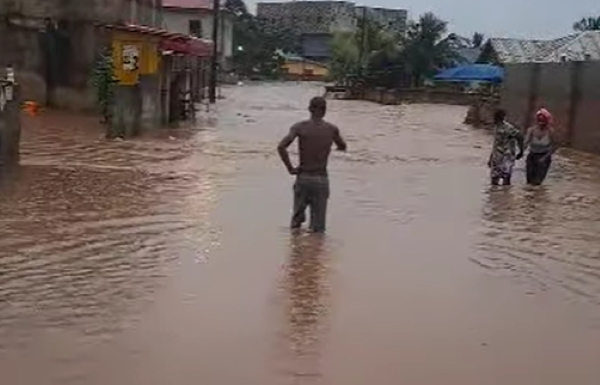
As Ghana once again mourns the loss of lives, destruction of homes, businesses and infrastructure caused by flooding, we must ask a difficult but necessary question: Are some of these disasters the result of avoidable planning decisions rather than simply acts of nature?

I recently came across a public notice published possibly in 2020 by the then La Dade-Kotopon Municipal Assembly inviting objections to an application for a change of land use from a protected coastal water frontage/mangrove protection zone to mixed use for a residential estate and recreational centre in the vicinity of the Kpeshie Lagoon.

Mangroves and wetlands are internationally recognised as critical natural flood defences. They absorb excess rainfall, reduce coastal erosion, slow stormwater runoff and provide a natural buffer against flooding. Their protection is not merely an environmental issue; it is fundamentally a public safety issue.
The concern therefore extends beyond one particular application. Across Ghana, wetlands, waterways and natural drainage corridors continue to disappear under increasing development pressure. At the same time, communities experience increasingly severe flooding after heavy rainfall.
This coincidence demands serious scrutiny.
I therefore call on the Government of Ghana to establish an independent public investigation into planning approvals granted over the past decade affecting wetlands, lagoons, waterways and designated flood-prone areas.
Such an investigation should determine:
- Whether all statutory planning and environmental procedures were properly followed.
- Whether the required environmental impact assessments adequately considered flood risk.
- Whether approvals were granted contrary to existing planning or environmental laws.
- Whether public objections and expert advice were appropriately considered.
- Whether any planning decisions have materially contributed to the increased flooding experienced in surrounding communities.
Where the investigation finds that approvals were lawfully granted after full compliance with all statutory requirements, the public will gain confidence in the integrity of the planning process.
However, if the investigation uncovers negligence, abuse of office, corruption, misconduct or breaches of planning or environmental legislation, then those responsible—whether public officials, developers or any other persons—should be held fully accountable under the laws of Ghana.
Accountability is not about assigning blame after tragedy. It is about learning from mistakes, restoring public confidence and preventing further loss of life and property.
Flooding should not become an annual national emergency that we simply accept as inevitable. While climate change undoubtedly contributes to heavier rainfall, human decisions regarding land use, drainage systems and environmental protection also play a significant role.
The Constitution places a duty on the State to safeguard Ghana’s natural resources and protect the welfare of its citizens. Planning authorities exercise powers that directly affect public safety and therefore must be held to the highest standards of transparency, professionalism and accountability.
The victims of flooding deserve more than relief items after each disaster. They deserve to know whether the institutions entrusted with protecting them have discharged their responsibilities faithfully.
An independent investigation would not only establish the facts; it would also provide recommendations to strengthen planning governance, improve environmental protection and ensure that future development is both sustainable and safe.
Ghana must not wait for another rainy season before asking these questions.
Respectfully on behalf of the Citizens of Ghana 🇬🇭
Bishop Dr Suzanne Nti
Chairperson, Crusaders Against Corruption (Ghana)


