


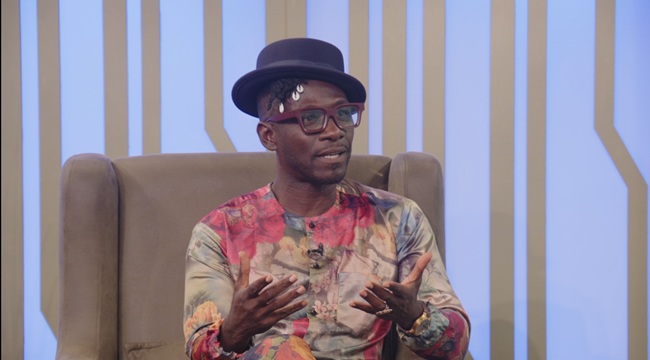
Ghanaian rapper and development activist Kwame Nsiah-Apau, popularly known as Okyeame Kwame or the “Rap Doctor,” has expressed support for women taking up leadership positions in governance, saying he would vote for a female presidential candidate if she were equally qualified and responsible as her male counterpart.

The musician, who is known for his advocacy for women’s empowerment, made the comments during an interview with Nikki Samonas on Joy Prime’s Changes.
Asked whether he would vote for and advocate for a female party flagbearer seeking to become President of Ghana, Okyeame Kwame said he would gladly support such a candidate under those circumstances.
He said his position was informed by his view that women tend to demonstrate greater empathy and may be less likely than men to misuse public resources.
“If that woman and the man are both equally qualified and they’re equally responsible, I’ll vote for the woman because women usually, not all the time, have a bit more empathy and they’re less likely to steal from the state than men,” he said.
He, however, acknowledged that such a view could not be applied universally, noting that there have also been cases involving female leaders and alleged misuse of state resources.
Women and leadership
Beyond questions of public finance, Okyeame Kwame said he believed women generally brought qualities such as care, empathy, nurturing and sympathy to leadership.
He argued that these qualities could be valuable in managing the affairs of a country.
“…women come with a lot of love, empathy, sympathy, nurture; they have that motherly thing where they care more about people. Men are inclined to care more about things as Jordan Peterson said. So, I think a women president will be dope,” he said.
His comments form part of his broader advocacy for greater recognition and empowerment of women in Ghanaian society.
‘Big Up’ celebrates Ghanaian women
Okyeame Kwame’s support for women is also reflected in his latest song, Big Up, which he said celebrates women who have contributed to Ghana’s development but have not received sufficient recognition.
He mentioned five women referenced in the song: Susanna Al-Hassan, Naa Dedei Ashikishan, Theodosia Okoh, Mabel Danquah and Ama Nkrumah.
According to him, these women made significant contributions during Ghana’s struggle for independence and the country’s early development.
“In the third song of the song ‘Big Up’, I mentioned some five women; Susanna Al-Hassan who was the first female Minister of State in the whole of Africa who also supported Nkrumah during independence, Naa Dedei Ashikishan who was one of the business women in Ghana. Her face is on the 50 pesewas coin; Theodosia Okoh who was an artiste, Mabel Danquah and Ama Nkrumah,” he said.
He said some of the women endured significant personal sacrifices in support of the independence struggle.
“These women during the struggle for independence, supported. Some of them went to jail, lost their jobs, they had studied and put their hearts behind the struggle for independence and the beginning of Ghana. But I don’t think that these women are celebrated well enough. There are more of them but I mentioned five in my song,” he added.
Call for greater recognition
Okyeame Kwame called for the contributions of Ghanaian women who played significant roles in the country’s history to receive greater recognition.
He suggested that their lives and achievements be incorporated into school curricula and that prominent public spaces be named after some of them.
“I want to see all of them in Social Studies books, I want students to write exams about them. I want young girls to know that we don’t only have the founding fathers, but there are also founding mothers,” he said.
“I want prominent streets named after some of them. I want them to have their own roundabout; the founding mothers roundabout,” he added.
He further called on society to celebrate women’s contributions alongside those of men, arguing that greater recognition of women could help promote a broader understanding of leadership and encourage greater empathy in society.


