


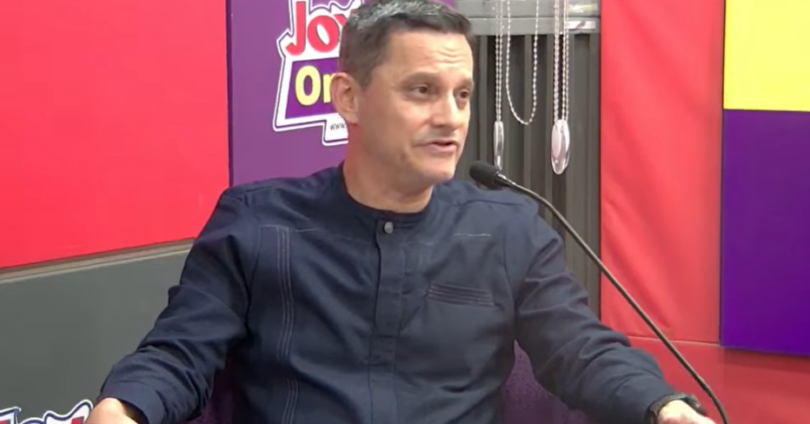
The Chief Executive Officer of Japan Motors Ghana, Salem Kalmoni, has urged Ghanaian entrepreneurs to involve their children in family businesses from an early age to prepare them for leadership and ensure the long-term survival of their enterprises.

He said introducing children to the daily operations of a business while they are young helps them understand its values, culture and responsibilities before they are eventually called upon to assume leadership roles.
Speaking on Joy FM’s Personality Profile with Lexis Bill on Thursday, November 5, Mr Kalmoni reflected on how his father introduced him to the family business during his childhood, partly because he was the firstborn.
He explained that his father regularly took him along to social engagements and exposed him to different aspects of the business, particularly during school holidays.
“One thing about family businesses is you involve your children, especially the firstborn. I was the firstborn,” he said.
He encouraged aspiring entrepreneurs seeking to build multi-generational businesses to adopt a similar approach.
“And perhaps this is one lesson for aspiring multi-generational Ghanaian family businesses: involve your children in the business from youth. From a very early age. Get them in,” he advised.
Mr Kalmoni also recalled accompanying his father to the family’s farm on the outskirts of Accra, an area that has since been developed into Lakeside Estate.
He said the property, known as Agricattle in the early 1970s, was among the family’s business interests that exposed him to entrepreneurship and business management from childhood.
The succession challenge facing family businesses
Mr Kalmoni’s advice comes amid persistent concerns about succession planning and the sustainability of family-owned businesses in Ghana.
Although family enterprises contribute significantly to employment, investment and economic activity, many struggle to survive the transition from one generation of leadership to another.
A 2014 PricewaterhouseCoopers (PwC) report indicated that approximately 43 per cent of family businesses had no succession plans, while only about 12 per cent survived into the third generation.
These figures highlight the importance of identifying and preparing potential successors early rather than waiting until a founder or business leader is ready to exit.
Research into family-owned enterprises in Ghana has similarly emphasised the need for succession to be treated as a gradual process involving preparation, training and the cooperation of family members and other stakeholders.
A family business built across generations
Mr Kalmoni’s own experience reflects the generational transition he is encouraging other Ghanaian business owners to pursue.
Japan Motors Trading Company Limited traces its origins to Kalmoni & Sons, a family trading and transport business established by his grandfather, the late Salem Kalmoni, in 1920.
The family’s involvement in the automotive industry expanded in 1958 when it imported a Datsun vehicle, now associated with the Nissan brand, into Ghana.
Japan Motors Trading Company subsequently emerged from the family enterprise in 1962 and was incorporated as a limited liability company in 1965.
Over the years, the company has grown into a major player in Ghana’s automotive industry, representing several international vehicle and equipment brands while expanding its operations beyond Ghana.
Mr Kalmoni, a third-generation member of the family, joined the company in 1991 after completing his studies in Canada.
He has since led its operations and overseen its expansion in Ghana and other West African markets.
His experience, he suggests, demonstrates how early exposure, mentorship and deliberate preparation can help family businesses preserve their values while positioning successive generations to sustain and grow the enterprise.


