


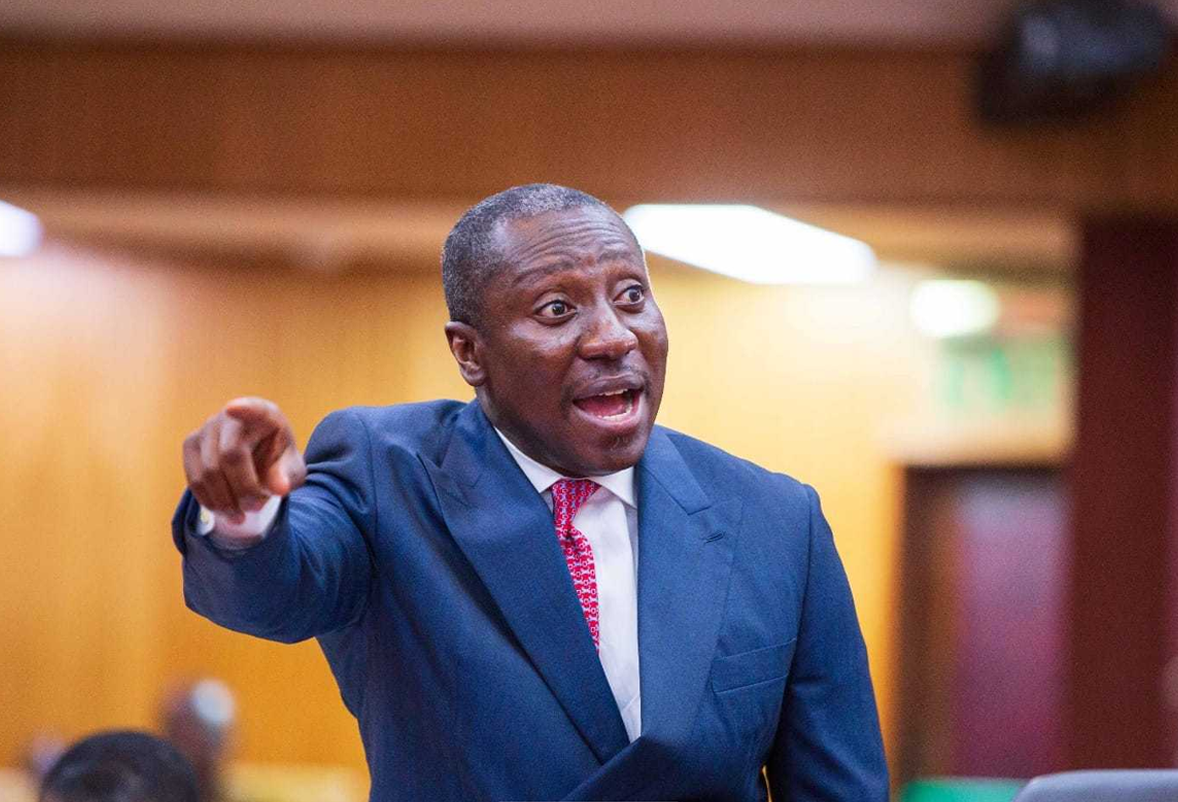
Minority Leader Alexander Afenyo-Markin has indicated that a future New Patriotic Party (NPP) government could reverse the tribunals system being introduced by the Mahama administration, arguing that the policy is unnecessary and risks disrupting Ghana’s existing judicial structure.

Speaking exclusively on Joy FM’s Super Morning Show, the Effutu Member of Parliament said the NPP believes the focus should be on strengthening the country’s courts rather than creating regional tribunals.
“The NPP’s position is very clear. We don’t need these regional tribunals,” he said.
“What we need to do is strengthen our court system, invest in retooling, train our judges and ensure that people with the necessary integrity are appointed to administer justice without fear or favour,” he added.
Mr Afenyo-Markin argued that any reform that undermines Ghana’s current judicial framework should be reversed.
“Anything that will disturb the existing judicial infrastructure would have to go,” he stated.
While he stopped short of explicitly saying the Tribunals Bill, 2026, would be repealed, his remarks suggest that an NPP administration would seek to dismantle the tribunals framework if it returns to power.
Explaining how such changes could be implemented, the Minority Leader said any future government would require both executive authority and parliamentary backing to carry out significant legal and institutional reforms.
“You need executive powers to support your legislative powers in Parliament to effect major reforms, transformations and changes,” he said.
His comments come after Parliament passed the Tribunals Bill, 2026, on July 17, 2026, following a walkout by Minority MPs led by Mr Afenyo-Markin during proceedings a day earlier.
The Minority has opposed the legislation, arguing that the proposed tribunals could undermine due process and the constitutional guarantee of a fair trial.
The government, however, has defended the Bill, stating that the reintroduction of tribunals is intended to improve access to justice by reducing delays and helping to clear the growing backlog of cases before the courts.
The legislation is currently awaiting presidential assent from President John Dramani Mahama before it becomes law.


