


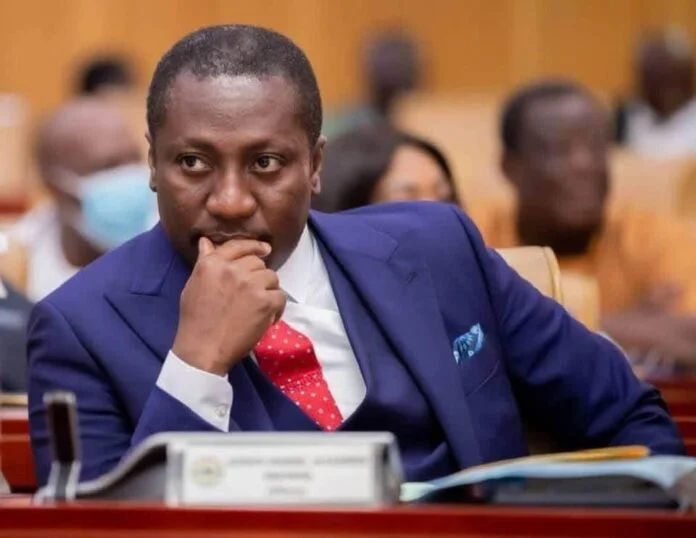
Minority Leader in Parliament Alexander Afenyo-Markin has warned that officials of the Ghana Gold Board (GoldBod) could face “scary” bail conditions in the future if the standards currently being applied to some former government officials are maintained.

Speaking at a press conference on Tuesday, August 18, Mr Afenyo-Markin compared the bail conditions imposed on some former government officials under investigation to what officials of the current administration could face if the New Patriotic Party (NPP) returns to power.
He argued that the approach being adopted by the government in some ongoing investigations could establish a precedent that may have consequences for current public officials in the future.
Warning to GoldBod leadership
Mr Afenyo-Markin specifically referred to the leadership of GoldBod, suggesting that its officials should consider the possibility of facing similar treatment if there is a change of government.
His comments were linked to allegations surrounding what he described as approximately GH¢22 billion in losses involving GoldBod.
He cautioned officials currently in government to consider how the standards being applied to individuals under investigation could affect them when political power changes hands.
According to the Minority Leader, bail conditions should be determined according to established legal principles rather than political considerations.
Minority questions bail conditions
Mr Afenyo-Markin’s comments come amid growing political debate over investigations into former government officials and individuals associated with the previous administration.
The Minority has repeatedly criticised what it considers excessive bail conditions imposed on some accused persons, arguing that the conditions could amount to political persecution.
The government, however, has maintained that the ongoing investigations are aimed at promoting accountability, addressing alleged wrongdoing and recovering public resources.
The Minority has challenged aspects of the government’s approach, particularly the manner in which some investigations and related legal processes are being conducted.
Political consequences
Mr Afenyo-Markin’s latest warning broadens the debate beyond the cases currently before investigative and law-enforcement agencies to the potential consequences of the standards being established.
He suggested that public officials who support or tolerate stringent conditions for persons under investigation could themselves become subject to similar treatment if political power changes hands.
The Minority Leader therefore urged the government to ensure that investigations and bail decisions are guided by due process and consistent legal standards rather than partisan considerations.
His remarks are likely to add to the ongoing political debate over the balance between accountability, the recovery of state resources and the protection of the rights of persons under investigation.


