


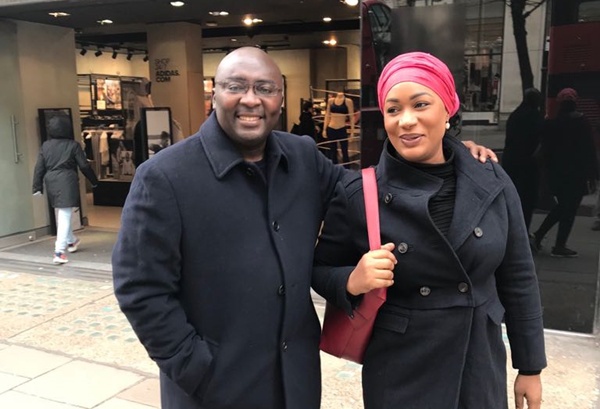
Former Vice-President and 2028 New Patriotic Party (NPP) flagbearer, Dr Mahamudu Bawumia, and his wife, Samira Bawumia, have been safely relocated from Qatar to another country as tensions intensify across the Middle East.

Diplomatic sources confirmed to JoyNews that the relocation was undertaken as a precautionary measure amid the rapidly evolving security situation in the region.
The operation was coordinated by Ghana’s diplomatic missions following direct instructions from the Minister for Foreign Affairs, Samuel Okudzeto Ablakwa.
Acting on behalf of the Government of Ghana, the Minister directed embassies in the Middle East to take immediate steps to guarantee the safety of the former Vice-President, his wife and members of their entourage.
Embassy officials worked closely with host authorities to arrange swift and discreet travel logistics. While operational details remain confidential for security reasons, officials described the relocation as smooth and well-coordinated.
Government on high alert
The Ministry of Foreign Affairs says it is maintaining heightened vigilance as the regional crisis deepens. Government sources indicate that efforts are underway to safeguard all Ghanaians living in or transiting through affected parts of the Middle East.
Ghanaian embassies across the region have reportedly been placed on standby to provide consular assistance and emergency support where necessary. Monitoring mechanisms remain active, with authorities tracking developments closely.
Escalating regional crisis
The relocation comes against the backdrop of one of the most volatile periods in the Middle East in recent years. Hostilities involving the United States, Israel and Iran have escalated sharply, with missile and drone exchanges reported across multiple fronts.
At the centre of the crisis is the 2026 Strait of Hormuz confrontation, which began on February 28, 2026, following coordinated military strikes by the US and Israel targeting Iranian military facilities and senior command structures. Iran subsequently launched retaliatory attacks, raising fears of a broader regional conflict.
The situation has disrupted maritime traffic through the Strait of Hormuz — a strategic chokepoint through which roughly one-fifth of global crude oil shipments pass — sending shockwaves through energy markets and international trade.
Airspace closures across several Gulf states, travel disruptions and mounting geopolitical uncertainty have further complicated the situation. The United Nations has warned that the escalating violence risks worsening humanitarian conditions and undermining relief operations in affected areas.
In response, Ghana has activated emergency preparedness measures, including the evacuation of diplomatic staff from Tehran and other high-risk locations, as authorities continue to assess the evolving security landscape.
For now, officials say the priority remains clear: ensuring the safety of Ghanaian nationals wherever they may be in the region.


