


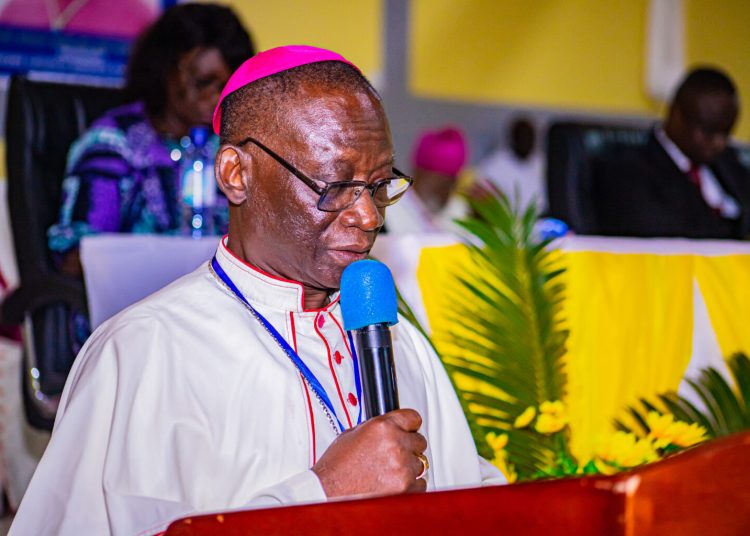
The Ghana Catholic Bishops’ Conference has renewed pressure on the government to conclude and sign the long-awaited agreement between the state and Churches on the management of mission schools.

The Bishops say the agreement is necessary to clearly define the respective responsibilities of government and the Churches in areas including admissions, governance, appointment of head teachers, religious and moral formation, discipline, infrastructure and accountability.
They also want the agreement to guarantee an appropriate role for founding Churches in preserving the distinct identity and character of their schools.
The call comes amid growing concerns over the Computerised School Selection and Placement System (CSSPS) and complaints from parents and students about challenges associated with the placement process.
Bishops defend role of mission schools
The Conference said Catholic and other Christian mission schools were established by Churches long before the modern state assumed responsibility for providing universal education.
While acknowledging government’s responsibility to ensure equitable access to education, the Bishops said founding Churches also have a legitimate interest in protecting the religious character, values, discipline and educational vision of their institutions.
As part of this position, the Conference said it resolved at its 2025 National Catholic Education Forum in Koforidua that 20% of annual admissions to Catholic mission schools should be reserved for Catholic candidates.
“This is therefore not a fresh proposal but a call for the implementation of a decision already taken,” the Bishops said.
They explained that the arrangement would ensure that Catholic schools retain a sufficient number of students who can participate in the religious and moral formation that forms an integral part of the schools’ mission.
The Bishops, however, stressed that the policy must not become a vehicle for corruption, favouritism or the sale of placements.
They said any such arrangement should be administered transparently through the appropriate Boards of Governors and diocesan education offices, subjected to annual audits and strictly prohibit the exchange of money.
Concerns over 2026 placement exercise
The Conference also expressed concern over complaints arising from this year’s school placement exercise.
Of the 604,567 candidates who qualified for placement, 527,932 had been placed when the results were released.
The Bishops said complaints involving students being assigned to schools considered unsuitable because of their sex, disability, personal circumstances or location must be properly investigated and addressed.
They also raised concerns over allegations that some parents are being asked to pay money to secure school placements.
“If placement is meant to be free, no official, agent, or intermediary should request or accept payment for it,” the Conference said, calling for investigations into such allegations.
Calls for transparency on ‘protocol’ admissions
The Bishops further demanded greater clarity on so-called “protocol” admissions, insisting that the public deserves to know the legal basis for such arrangements, the number of places involved, the criteria used and the officials or institutions responsible.
They called for an independent technical review of the placement system, with the major findings made available to the public.
The Conference also wants a stronger appeals mechanism and greater transparency in the placement process so parents can understand how examination scores, programme choices, cut-off points, available spaces and other factors influence placement decisions.
Bishops pledge action
The Catholic Bishops said they would, for their part, implement without delay the decision already taken regarding the admission of Catholic students into Catholic mission schools.
They urged the government to conclude the long-awaited agreement between the state and mission Churches, while calling for stronger safeguards for the identity of mission schools and greater openness in admissions.
The Bishops also called for an end to improper protocol arrangements and improvements to the appeals process.
“Ghana’s children deserve nothing less,” the Conference said.


