


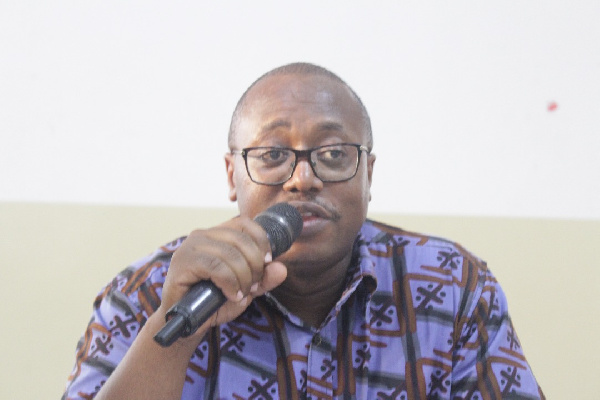
Director of Public Engagement and Partnerships at the Centre for Democratic Development (CDD-Ghana), Dr Kojo Pumpuni Asante, has called on government to provide a clear and unified position on the future and legality of the Office of the Special Prosecutor (OSP), warning that conflicting signals risk undermining Ghana’s anti-corruption efforts.

Speaking on Joy FM’s Super Morning Show on 16 April, Dr Asante expressed concern that divergent positions from the Presidency and the Attorney-General are creating confusion among citizens and stakeholders, making it difficult to assess the government’s policy direction on accountability.
“There are two things I want clarity on: What is government’s position on the OSP? The Attorney-General has made his position clear, but the President’s position appears contrary,” he stated.
His remarks follow a recent ruling by the Accra High Court, which held that the OSP does not have independent authority to prosecute criminal cases and must instead refer such matters to the Attorney-General’s Department. The decision has sparked national debate over the scope and effectiveness of the anti-corruption body.
Dr Asante cautioned that inconsistencies at the highest levels of government could erode public trust in state institutions and weaken confidence in the anti-corruption agenda. He argued that if government believes the OSP’s legal framework is unconstitutional, it possesses the legislative authority to act decisively without relying on prolonged judicial processes.
“The Attorney-General can go to Parliament today and put an act to repeal the law. They have the majority, so they do not even need the court,” he noted.
He further criticised the current situation as inefficient and counterproductive, warning that it risks wasting public resources while diminishing trust in governance systems. According to him, Ghanaians are sufficiently informed to recognise the implications of the ongoing contradictions.
Dr Asante also situated the debate within a broader historical context, noting that discussions on the structure and independence of anti-corruption institutions in Ghana date back to governance reforms in the early 2000s. He referenced longstanding debates on separating the prosecutorial and advisory roles of the Attorney-General, as well as efforts to establish independent accountability mechanisms, which culminated in the creation of the OSP in 2017.
“This idea that the political class does not want any design of accountability where they do not control prosecutions has been with us since the APRM process in 2004,” he observed.
He warned that any attempt to alter or weaken the current framework without clear national consensus could destabilise governance and hinder anti-corruption enforcement.
“If anybody feels differently and wants to change it, that is acceptable—but let the people decide. What we are doing now is very damaging to the credibility of government’s anti-corruption fight,” he stated.
Dr Asante also highlighted the practical implications of the prevailing uncertainty, particularly for ongoing investigations and prosecutions. He cautioned that ambiguity in the legal and policy environment could delay cases and create opportunities for accused persons to evade accountability.
“This uncertainty is not helpful. It makes it easier for accused persons to navigate the system and potentially escape accountability in the middle of cases,” he warned.
He concluded by urging government to take a definitive and transparent position on the OSP to guide public understanding and ensure effective institutional coordination.
“We need clarity from government. Government must clearly state whether it believes the OSP was properly constituted or not, so that Ghanaians can engage from an informed position,” he said, adding that any internal disagreements should be resolved openly and decisively.
Dr Asante also called on the President to personally address the issue, emphasising that continued ambiguity could have broader consequences for governance and public confidence in Ghana’s democratic institutions.


