


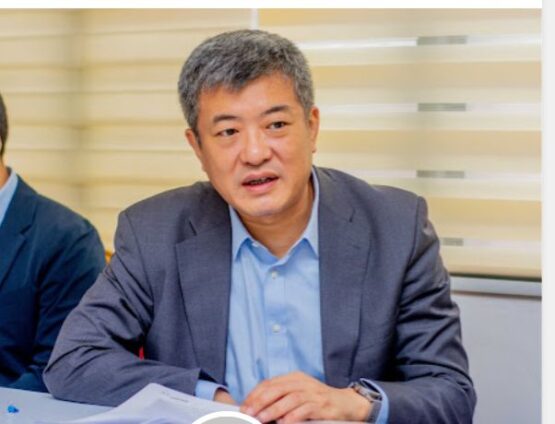
China’s Ambassador to Ghana, Cong Song, has called for greater investment in people-to-people exchanges, saying stronger human connections are essential to sustaining the long-term partnership between Ghana and China.

Speaking at the 2026 Ghana-China Media Fellowship organised by the Africa-China Centre for Policy and Advisory (ACCPA) in Accra, the Ambassador said bilateral relations should extend beyond trade, infrastructure and investment to include deeper cooperation in education, culture and professional development.
According to Mr Song, meaningful engagement between citizens of both countries is critical to promoting mutual understanding, strengthening trust and building a durable foundation for future collaboration.
Addressing the theme of dialogue among civilisations, he stressed that differences in history, culture and development should be embraced as opportunities for learning rather than treated as barriers.
“No civilisation is superior to another,” he said, urging countries to respect each other’s experiences and development paths as a basis for peaceful coexistence and shared progress.
Mr Song observed that Ghana and China have significantly expanded exchanges in recent years, particularly through educational opportunities, cultural programmes and professional training initiatives.
He noted that increasing numbers of Ghanaian students continue to study in China, while interest in Chinese language education and cultural activities has grown across universities and educational institutions in Ghana.
The Ambassador also highlighted the growing participation of journalists, researchers, artists and young professionals from both countries in exchange programmes designed to strengthen cultural understanding and institutional cooperation.
Touching on the designation of 2026 as the China-Africa Year of People-to-People Exchanges, Mr Song described the initiative as an important opportunity to deepen collaboration in education, tourism, media, youth development and cultural engagement across the continent.
He said these exchanges complement economic partnerships by fostering stronger personal relationships and greater appreciation between African and Chinese societies.
However, the Ambassador emphasised that cultural exchange should be reciprocal.
He called for greater recognition of Ghanaian and African history, culture and perspectives in China, just as Chinese traditions and development experiences continue to receive growing attention in Ghana.
Mr Song identified language barriers, limited public awareness and persistent stereotypes as challenges that continue to hinder deeper engagement between the two peoples.
He urged the media to play a leading role in overcoming those obstacles by producing balanced, factual and responsible reporting that presents a comprehensive picture of Ghana-China relations.
According to him, objective journalism is vital to building trust, correcting misconceptions and encouraging informed dialogue between citizens of both countries.
Looking ahead, Mr Song said the future of Ghana-China relations would be determined not only by diplomatic agreements, trade volumes and infrastructure projects, but also by the strength of personal relationships forged between ordinary Ghanaians and Chinese citizens.
He expressed confidence that sustained cooperation in education, culture and people-to-people exchanges would further reinforce the comprehensive strategic partnership between Ghana and China while contributing to stronger China-Africa relations.


