


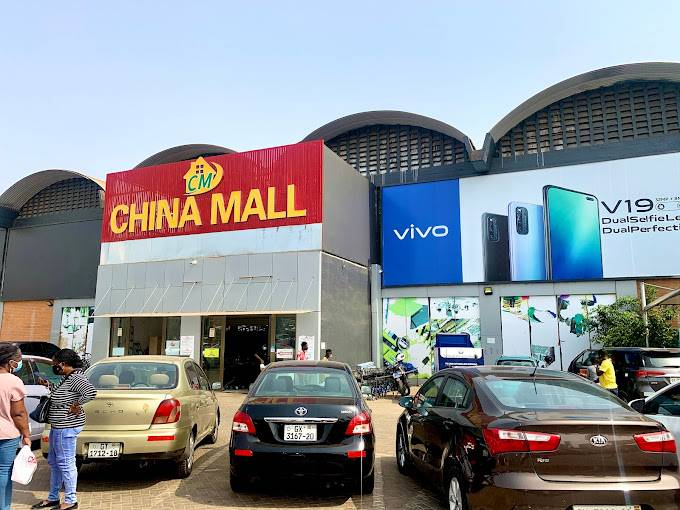
The Ghana Union of Traders’ Associations (GUTA) has raised concerns over the growing presence of Chinese-owned shopping malls in Ghana, claiming that the outlets are taking an estimated 60 per cent of the market share and putting pressure on locally owned businesses.

The association has called on the relevant authorities to investigate the expansion of the malls and assess their impact on Ghanaian traders.
GUTA President Clement Boateng said the broader business environment had shown signs of improvement, with key economic indicators pointing in a positive direction. However, he warned that the increasing number of Chinese shopping malls was creating significant challenges for domestic businesses.
Speaking on Joy News’ PM Express Business Edition on Thursday, November 5, Mr Boateng said the improving economic conditions should translate into better trading opportunities for local businesses.
“If you all look at the microeconomic indices, one will say that they are all pointing to a very positive direction and definitely supposed to have a bearing on whatever activities that, as traders, we perform,” he said.
He, however, expressed concern that the growing number of Chinese-owned retail outlets was undermining the benefits of the improving economic environment for local traders.
“These Chinese shopping malls are springing up, and these shopping malls are taking about 60 per cent of our market share, and we think it is having a very negative impact as far as local businesses are concerned,” he stated.
Mr Boateng urged the authorities to examine the operations of the malls and determine how their expansion was affecting Ghanaian-owned businesses.
GUTA raises concerns over profit repatriation
The GUTA President also questioned the extent to which profits generated by the Chinese-owned malls were retained within Ghana, arguing that the expansion of local businesses would help keep more money in the domestic economy.
“These Chinese malls will repatriate their profits away. But if businesses, local businesses are doing well, definitely all the monies will remain here,” he said.
According to him, strengthening locally owned businesses would ensure that more earnings from commercial activities remained within the country, supporting domestic economic growth.
His comments add to GUTA’s concerns about the competitive pressures facing Ghanaian traders as foreign-owned retail outlets continue to expand across the market.
The association is calling for increased attention from the authorities to address the potential implications of the trend.
However, Mr Boateng did not outline specific regulatory measures he expects the government to introduce to address the concerns.


