


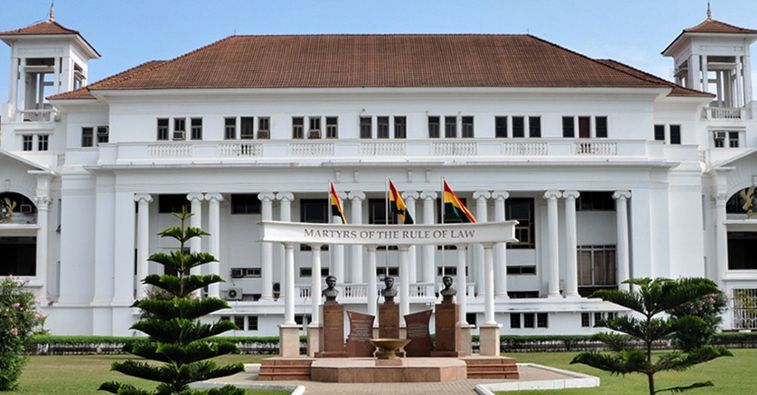
Fourteen civil society organisations have applied to the Supreme Court of Ghana for leave to participate in a constitutional case challenging the Office of the Special Prosecutor Act, 2017 (Act 959), describing the matter as one of significant public interest.

The application, filed on May 5, 2026, relates to Adamtey v Attorney-General (Suit No. J1/3/2026), a case that seeks to test key provisions underpinning the establishment of the Office of the Special Prosecutor.
In a joint statement issued on May 6, the coalition emphasised that its intervention is intended to support constitutional interpretation rather than advance partisan or personal interests. The groups stated that their involvement is grounded in a shared commitment to constitutionalism, accountable governance, anti-corruption efforts, and the protection of independent public institutions.
The organisations include the Ghana Centre for Democratic Development, Transparency International Ghana, Ghana Anti-Corruption Coalition, IMANI Africa, Democracy Hub, STAR-Ghana Foundation, NORSAAC, Penplusbytes, Africa Centre for Energy Policy (ACEP), Odekro, A Rocha Ghana, Parliamentary Network Africa, One Ghana Movement, and Africa Education Watch.
According to the coalition, several of the applicant organisations were directly involved in the drafting and advocacy processes that culminated in the passage of Act 959 in 2017, including engagements with Parliament’s Constitutional, Legal and Parliamentary Affairs Committee. They argue that this institutional memory positions them to assist the Court in interpreting the legislative intent and broader policy context of the law.
The groups are seeking to participate as amici curiae (friends of the court), a role that would allow them to provide legal and policy perspectives without becoming direct parties to the litigation.
They further commended the Court for what they described as its increasing openness to civil society participation in constitutional adjudication, noting that such engagement has enriched judicial deliberations and reflects a maturing constitutional practice.
If granted leave, the coalition indicated that it would contribute comparative insights on anti-corruption frameworks, institutional design, and public interest considerations relevant to the case.
The applicants are represented by a legal team that includes Kizito Beyuo, Oliver Barker-Vormawor, Samson Lardy Anyenini, and Clement Kojo Akapame.


