


Crusaders Against Corruption Ghana has called for urgent national action to address what it describes as a growing crisis of integrity affecting every level of Ghanaian society, from homes and schools to public institutions, political leadership, and the private sector.

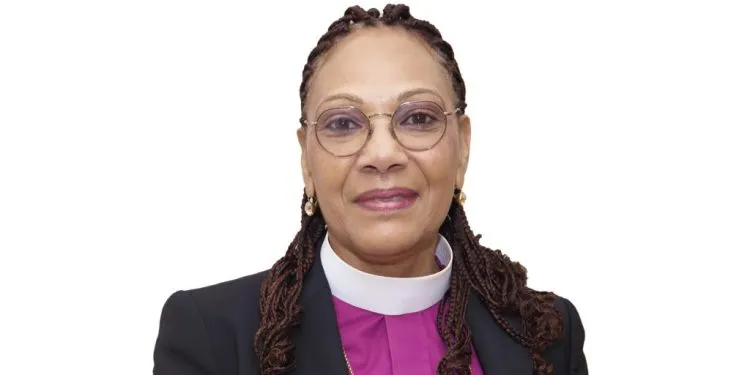
Speaking at the Public Forum on “Restoring Citizens’ Trust in the Fight Against Corruption in Ghana: The Role of the Media,” Chairperson of Crusaders Against Corruption Ghana, Bishop Dr. Suzanne Maria Nti, stated that corruption is not merely a legal problem but a deeper crisis of values, leadership, accountability, and national culture.
According to Bishop Nti, Ghana’s challenge is not only the high-profile corruption cases that dominate headlines, but the thousands of smaller acts of dishonesty that are tolerated every day and gradually undermine public trust.
The Broken Windows of Corruption
Drawing on the Broken Windows Theory developed by social scientists James Q. Wilson and George L. Kelling, Bishop Nti explained that societies decline when small signs of disorder are ignored.
“A nation does not lose integrity through one grand scandal. It loses integrity when thousands of small breaches are tolerated year after year.”
She noted that corruption often begins with seemingly minor acts:
- A student cheating in an examination.
- A teacher accepting gifts for preferential treatment.
- A public official demanding a “token” before performing a lawful duty.
- A politician distributing money in exchange for votes.
- A manager overlooking a small fraud.
“When wrongdoing is ignored, society receives a dangerous message: this behaviour is acceptable. Over time, small corruption becomes normal, larger corruption follows, and public trust begins to collapse.”
A National Crisis of Integrity
Bishop Nti warned that Ghana is increasingly confronted by behaviours that weaken national development and public confidence, including:
- Poor leadership and weak management.
- Lack of competence and meritocracy.
- Vote buying and electoral corruption.
- Sexual favours in exchange for employment, promotions, admissions, contracts, and grades.
- Examination malpractice.
- Abuse of office.
- Nepotism and favouritism.
- Misuse of public resources.
- Declining respect for ethical standards and accountability.
She observed that when honest people see unethical conduct go unpunished, cynicism grows and citizens begin to believe that integrity no longer matters.
“When citizens begin to say ‘everybody is corrupt,’ ‘nothing will happen,’ and ‘why should I be different,’ society enters a dangerous cycle of moral decline.”
Building Integrity from Childhood
Crusaders Against Corruption Ghana believes that the fight against corruption must begin long before individuals enter public office.
The organisation is calling for:
- Strong ethics and citizenship education in schools.
- Anti-corruption awareness programmes for children and youth.
- Greater parental responsibility in modelling honesty and accountability.
- Character development as a core objective of education.
“If children learn that success comes through cheating, they may later conclude that contracts are won through bribery and that public office exists for personal gain. The first broken window must be repaired early.”
Restoring Merit, Competence and Accountability
Bishop Nti stressed that leadership appointments and promotions must be based on competence, qualifications, integrity, and performance rather than political affiliation, tribal considerations, family connections, or personal loyalties.
“Poor leadership creates weak systems, and weak systems create corruption.”
The organisation further called for strengthened performance management systems across the public sector, including clear accountability mechanisms for leaders entrusted with public resources.
The Role of Institutions
Crusaders Against Corruption Ghana commended the work of anti-corruption institutions including CHRAJ, the Office of the Special Prosecutor, EOCO, the Auditor-General, and other oversight bodies.
However, the organisation stressed that investigations alone are insufficient.
“Citizens do not regain trust because investigations are announced. Trust is restored when cases are concluded, stolen assets are recovered, sanctions are imposed, and systems are strengthened to prevent future abuse.”
The Role of the Media
Addressing the central theme of the forum, Bishop Nti urged the media to move beyond sensational headlines and follow corruption stories through to their logical conclusion.
She challenged journalists and media houses to ask critical questions:
- Who was charged?
- Who was convicted?
- How much money was recovered?
- Who was sanctioned?
- What institutional reforms were implemented?
“The media must help citizens see consequences, not just allegations. The story must not end with an arrest. It must end with accountability.”
A Call for a National Integrity Movement
Crusaders Against Corruption Ghana is calling for a broad-based national movement involving government, civil society, religious institutions, educational institutions, the media, traditional authorities, and ordinary citizens.
The organisation believes that integrity must become a shared national value and not merely a compliance requirement.
Conclusion
Concluding her remarks, Bishop Nti called on all Ghanaians to reject corruption in all its forms and to become active participants in rebuilding trust within society.
“Ghana will not defeat corruption only by chasing scandals. We must repair the first broken window. Every small act of dishonesty that is ignored becomes permission for greater corruption tomorrow.”
“The future of Ghana depends not only on stronger laws and institutions, but on stronger values. Integrity must become our national culture.”


