


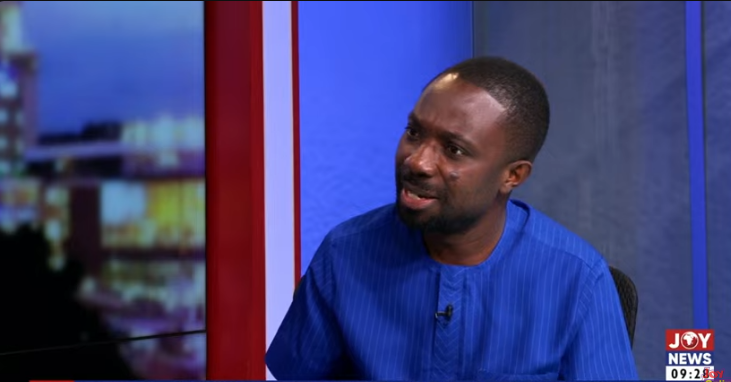
Newly elected Communications Director of the New Patriotic Party (NPP), Dennis Miracles Aboagye, has criticised NDC Deputy General Secretary Mustapha Gbande for admitting that he directed the Economic and Organised Crime Office (EOCO) to arrest Manhyia South MP Nana Agyei Baffour Awuah.

According to Mr Aboagye, it is inappropriate for a political party operative to instruct a law enforcement agency on whom to arrest, describing the development as a threat to the independence of state security institutions.
Speaking on JoyNews’ The Pulse on Monday, October 5, Mr Aboagye said Mr Gbande’s admission raised serious questions about Ghana’s democratic governance and the rule of law.
“It’s unfortunate… I saw his clip from the AM Show and I was just shaking my head. And I’m sure a lot of people are watching, both locally and in the international community. People are asking themselves, what kind of democracy is Ghana running?” he said.
Mr Aboagye argued that Mr Gbande’s admission could lend credibility to concerns about the selective application of justice under the current administration.
“If we have a situation where it takes Mustapha Gbande to direct the EOCO on whom to arrest in this country, it now explains why for a very long time people have been complaining about selective justice,” he stated.
He further questioned the authority of Mr Gbande, who also serves as Deputy Director of Operations at the Office of the President, to issue such an instruction.
According to Mr Aboagye, Mr Gbande is not a professional security officer and therefore has no mandate to direct EOCO on its operational decisions.
He stressed that law enforcement agencies must operate independently and apply the law consistently, regardless of an individual’s political affiliation or position.
“Any law that you selectively apply is illegal,” he said.
Mr Aboagye said he expected Mr Gbande to apologise for his admission rather than defend the directive, arguing that decisions to arrest individuals must be based on professional assessments, evidence and established legal procedures.
He maintained that allowing political actors to influence law enforcement operations could undermine public confidence in state institutions and Ghana’s democratic credentials.


