


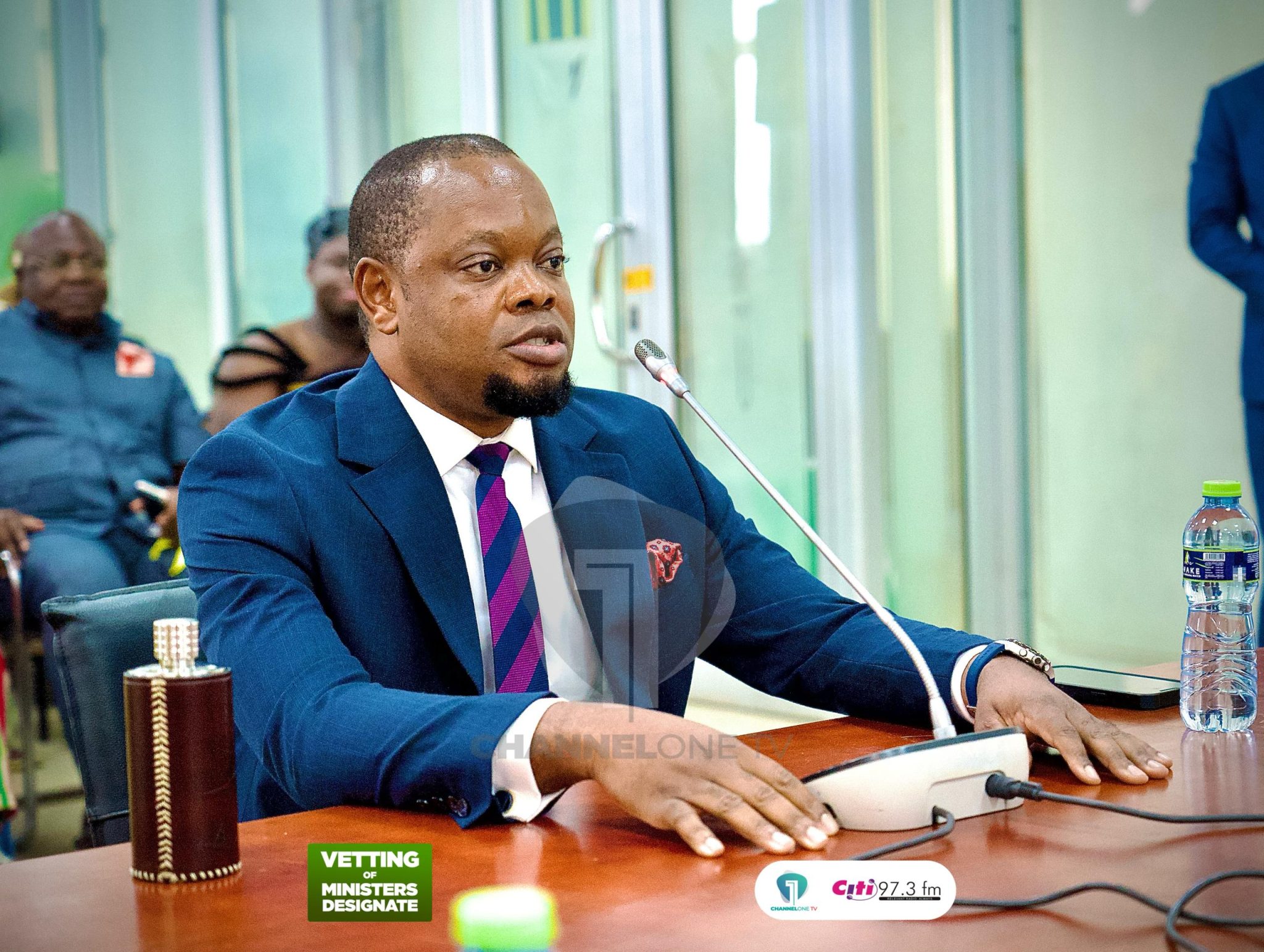
Deputy Attorney-General and Minister for Justice, Justice Srem Sai, has indicated that the Attorney-General’s Department is prepared to grant the Office of the Special Prosecutor (OSP) the necessary authorisation to prosecute cases, provided a formal request is submitted.

Speaking on Joy FM’s Super Morning Show on Friday, 17 April, he dismissed suggestions of tension between the two institutions, emphasising that the Attorney-General’s office remains open to collaboration in advancing the fight against corruption.
“Why not? Why won’t we grant them the authorisation when they apply for it?” he stated, describing the approach as both practical and consistent with constitutional requirements.
His remarks follow a recent High Court ruling in Accra, delivered on 15 April 2026, which significantly affected the prosecutorial mandate of the OSP. The court held that the Office does not possess constitutional authority to independently prosecute criminal cases without authorisation from the Attorney-General’s Department.
According to the ruling, Article 88 of the 1992 Constitution vests the power to initiate criminal prosecutions exclusively in the Attorney-General, unless such authority is formally delegated. Consequently, the court directed that all ongoing prosecutions handled by the OSP be transferred to the Attorney-General’s Department, creating uncertainty around several corruption-related cases.
The judgment arose from a legal challenge filed by private citizen Peter Achibold Hyde, who questioned the legal basis for the OSP’s independent prosecutorial powers.
The High Court decision also comes amid a separate constitutional case pending before the Supreme Court of Ghana, which could have broader implications for the future of the OSP. The case, initiated by Noah Ephraem Tetteh Adamtey, challenges the constitutionality of the Office of the Special Prosecutor Act, 2017 (Act 959).
In the suit, the plaintiff argues that Parliament exceeded its constitutional authority by establishing an institution with independent prosecutorial powers, contending that Articles 88(3) and 88(4) reserve such powers solely for the Attorney-General. The case seeks to have aspects of Act 959 declared unconstitutional, particularly provisions granting the OSP authority to prosecute independently.
Legal proceedings have clarified that the Attorney-General’s Department is the proper respondent in the constitutional challenge, as Parliament enacted the law establishing the OSP.
Legal analysts indicate that the Supreme Court’s eventual ruling will be decisive in determining the long-term structure and authority of the Office of the Special Prosecutor, including whether it can continue operating as an independent prosecutorial body or function under the supervision of the Attorney-General.
Pending that determination, ongoing legal developments are expected to continue shaping the scope and effectiveness of anti-corruption prosecutions in Ghana.


