


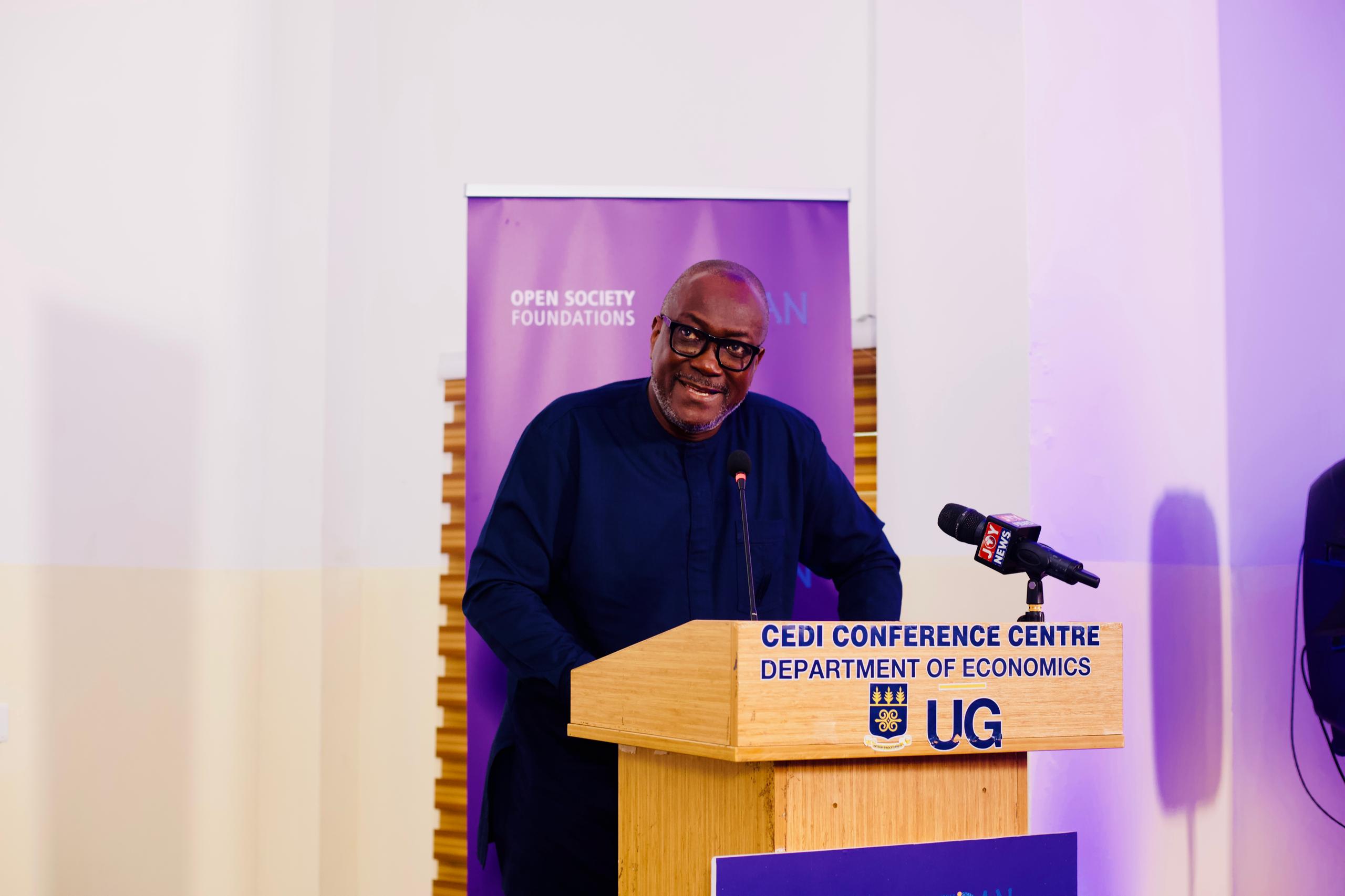
Chairman of the Constitution Review Committee (CRC), Professor H. Kwasi Prempeh, has defended calls for wider public consultation on Ghana’s constitutional review process, arguing that meaningful constitutional reforms should not be rushed at the expense of legitimacy and national consensus.

Speaking on JoyNews’ PM Express on Monday, Prof Prempeh said constitutions are fundamentally different from ordinary political decisions because they are designed to outlast governments, political parties and individual leaders.
“Constitutions are different; they are forward-looking. They last at least a generation. They set the foundational rules of the game for how the country is to be governed, how we recruit our national political leadership, how we exit them, how we distribute power, and these things transcend party governments.”
He urged political leaders to approach the review process with patriotism rather than partisan interests, stressing that the reforms should serve future generations rather than the immediate interests of any political party.
“They will come to this with a certain sense of patriotic obligation, not deference to party, because this is going to last beyond any party’s tenure, any president’s tenure.”
Prof Prempeh warned that treating constitutional reform as a political contest would undermine an opportunity to implement transformative changes.
“If you see it as just a zero-sum game of another way for one incumbent party to get their preferences vis-à-vis the rival party, then I think we have lost an opportunity to do some real game-changing reforms.”
While acknowledging that politics cannot be entirely separated from constitutional reform, he maintained that extensive public debate is essential to producing credible and enduring changes.
“Rather than rush things and go quickly to cast a vote, let us debate and argue it, and let the public be part of that debate, and let us see who has the superior arguments, because we are reforming our state, the republic, and how it’s governed.”
The constitutional law expert also admitted that the review process had already suffered delays, saying valuable time had been lost while waiting for the government’s position on the proposed reforms.
“I think we’ve lost time.”
According to Prof Prempeh, the process could have advanced more quickly if the government’s proposals had been submitted directly to the Constitution Review Committee alongside those of other stakeholders.
Although he recognised arguments for holding a constitutional referendum alongside the next local government elections to improve voter turnout, he insisted that the priority should be meaningful public engagement rather than speeding up the process.
He acknowledged that broader consultations could delay the reforms but argued that such trade-offs are inherent in democratic constitution-making.
“That’s what makes constitutions and constitution-making and democracy slower than the alternative. You slow it so that you hopefully improve the outcome, the legitimacy of the outcome. So yes, there is some trade-off that needs to be done. It will push it a little bit.”


