


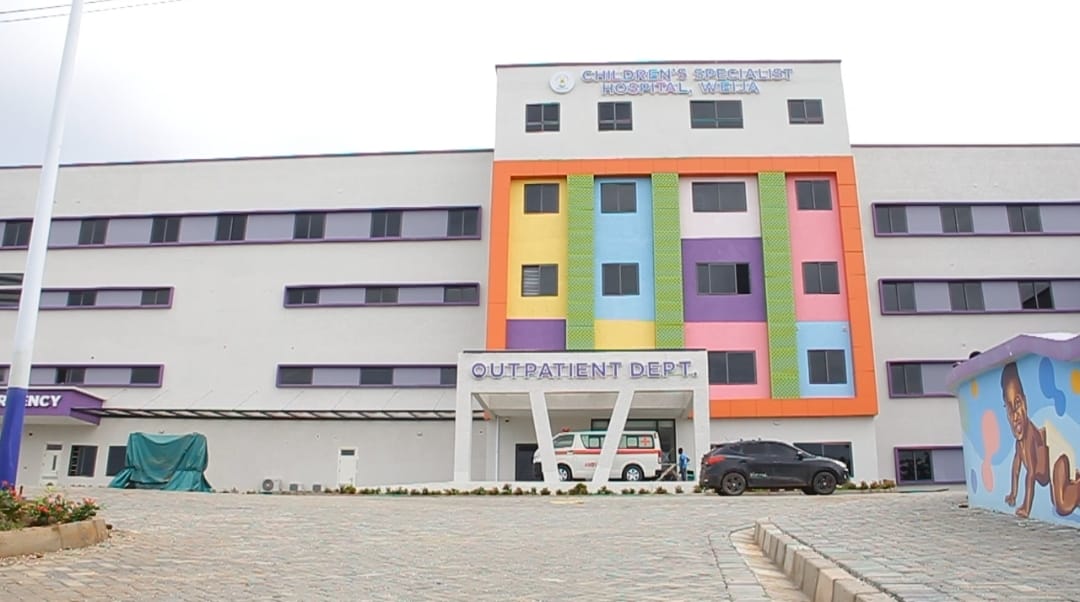
The contractor handling the Weija Children’s Hospital has been detained by officials of the Economic and Organised Crime Office (EOCO) after a meeting with the Minister of Health, Kwabena Mintah Akandoh, on the prolonged delay in opening the facility.

According to sources, the contractor was summoned to meet the Health Minister on Friday, July 10, to discuss finalising and transferring the hospital, which remains closed even though construction was completed long ago.
Individuals present at the meeting said government officials pressed the contractor to release the facility for public use, citing the urgent demand for specialised child healthcare in the area.
But the contractor allegedly refused the demand, stating he would not hand over the hospital until the full outstanding payment was settled or the government gave concrete timelines for clearing the remaining debt.
Sources add that the contractor insisted he could not transfer the hospital without first addressing the unpaid contractual amounts. After the meeting ended, EOCO personnel allegedly took the contractor into custody and moved him to the agency’s head office.
Details surrounding the arrest have not been made public and EOCO is yet to release an official statement.
The Ministry of Health has also stayed silent on the incident so far. The Weija Children’s Hospital has sparked public frustration after staying shut for over two years despite the building works being done.
The 120-bed specialist facility, situated in the Weija-Gbawe Municipality, was built to expand access to paediatric care and ease congestion at key referral centres such as Korle Bu Teaching Hospital and Princess Marie Louise Children’s Hospital.
The project was designed to deliver specialised treatment for infants, children and teenagers, with modern wards, surgical theatres, ICU units and outpatient departments.
Even though the main structure is complete, the hospital has not been inaugurated or opened to patients, mainly because of unresolved contract and administrative matters, including payment disputes and unfinished ancillary works. The prolonged hold-up has drawn criticism from health experts and local residents, especially as existing health facilities struggle with rising patient loads and recurring disease outbreaks.


