


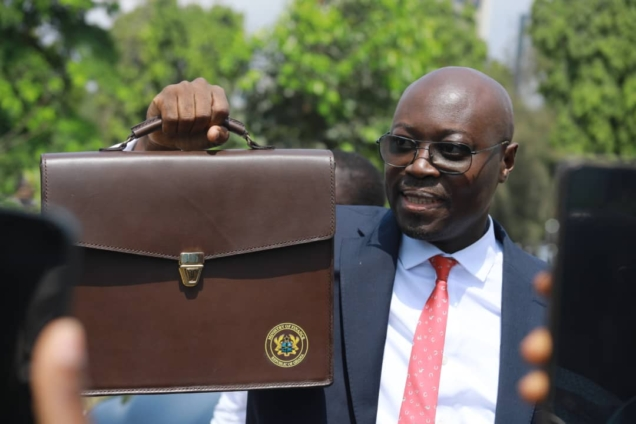
Chief Executive Officer of the Ghana Chamber of Commerce and Industry (GCCI), Mark Badu-Aboagye, has criticised the 2026 Mid-Year Budget Review, saying it failed to provide a clear roadmap for implementing the government’s flagship 24-Hour Economy policy.

Speaking on JoyNews’ PM Express Business Edition on Thursday, Badu-Aboagye described the omission as a major disappointment, warning that Ghana could miss a crucial opportunity for economic transformation if the policy is not translated into concrete action.
“Let me start with my disappointment with the Mid-Year Budget review. I will take you from the perspective of the 24-Hour Economy. For me, it is the major development blueprint that we have in this country, and if you miss it, we are doomed in the next years ahead of us,” he said.
According to him, every national budget should be aligned with the 24-Hour Economy agenda because of its central role in driving industrialisation, exports and job creation.
“I’m expecting that every budget, be it a Mid-Year or a major budget, should be aligned to the 24-Hour Economy, and there should be strong policy statements on the 24-Hour Economy. I didn’t see or hear much about that,” he stated.
While commending the overall vision behind the policy, Badu-Aboagye argued that the real challenge lies in its implementation.
“The policy is good, eloquently presented by the 24-Hour Economy Secretariat. But the core issue is implementation,” he said.
He stressed that although the initiative is intended to be private sector-led, businesses cannot drive industrialisation without an enabling business environment.
According to him, high borrowing costs remain one of the biggest obstacles to private sector investment in manufacturing.
“We’ve seen interest rates coming down, but for somebody who wants to go into industrialisation, 16.5% interest is still on the higher side. The policy rate of 14% is still on the high side. We talk about the cost of electricity and all those things. So we need to create that environment for the private sector,” he said.
Badu-Aboagye questioned expectations that businesses would finance industrial projects through expensive commercial loans.
“If you want them to say private sector, just as we’ve done for previous development policies like One District, One Factory (1D1F), and we think people will just go and borrow at 35% to set up a factory that will not make any profit, they won’t do that,” he remarked.
He cautioned that unless the government addresses these structural constraints, the 24-Hour Economy initiative could suffer the same implementation challenges that affected previous industrialisation programmes.
The GCCI CEO also argued that allocating funds to run the 24-Hour Economy Secretariat alone is insufficient to demonstrate progress.
“There is not enough in setting up a secretariat and saying that I have given them GH¢101 million to run the secretariat and have an office. What is on the ground for us to see is what we are looking out for,” he said.
Badu-Aboagye maintained that industrialisation must remain the cornerstone of the government’s flagship policy, insisting that the goals of increasing exports and creating sustainable jobs cannot be achieved without first expanding the country’s manufacturing base.
“Industrialisation is key. Whatever we need as the private sector to be able to kick-start this industrialisation, I think they should make it happen,” he added.


