


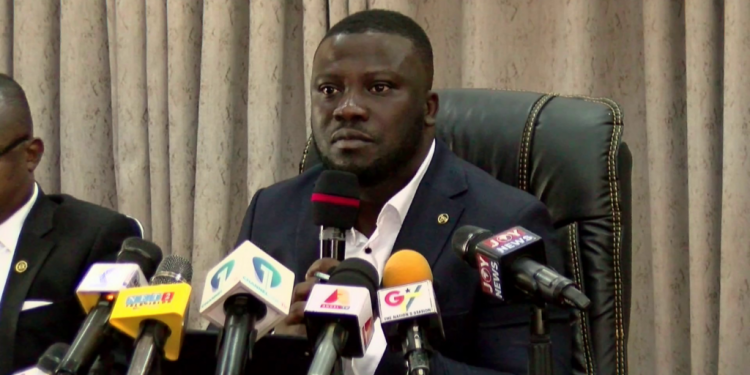
The Gender Centre for Empowering Development (GenCED) has condemned what it describes as sexually suggestive, misogynistic and degrading remarks allegedly directed at New Patriotic Party (NPP) politician Akosua Asaa Manu during a recent social media exchange involving Ashanti Regional Minister, Dr Frank Amoakohene.

In a statement issued on Thursday, the gender advocacy organisation expressed concern over comments circulating on social media and other media platforms, which it said contained sexual undertones and language aimed at humiliating and demeaning a female political figure.
According to GenCED, while political disagreements and public debate are essential elements of democracy, sexual harassment, misogyny and gender-based abuse have no place in Ghana’s political discourse.
“The reported comments, including references carrying explicit sexual connotations and derogatory language aimed at reducing a woman’s identity, dignity and political standing to sexual objects or body parts, are offensive, unacceptable and wholly inconsistent with the standards expected in a democratic society,” the statement said.
Concerns Over Hostility Towards Women in Politics
GenCED warned that such conduct contributes to the hostile environment many women face in politics, including discrimination, intimidation, online harassment, sexist stereotypes, character attacks and threats to personal safety.
The organisation noted that when public officials or political actors use sexualised language against women, it discourages women and young girls from pursuing leadership roles and participating actively in governance.
“The normalisation of such conduct sends a dangerous message that women who enter politics must endure humiliation, sexual objectification and abuse rather than engage in robust debates about policies, governance and national development,” the statement added.
Akosua Manu, popularly known as “Kozie,” is a communications professional and politician who previously served as Deputy Director of Communications at the Office of the First Lady and later as Deputy Chief Executive Officer of the National Youth Authority. She was also the NPP parliamentary candidate for Adentan in the 2024 general election and currently serves as a spokesperson for the party’s Gender and Social Protection Committee.
GenCED said it was particularly disturbed that the reported remarks appeared intended to ridicule and sexually humiliate a female political actor, arguing that such conduct undermines both the dignity of the individual concerned and broader efforts to advance gender equality and women’s leadership.
Questions Raised Over Ethical Standards
The organisation also referenced provisions in the government’s Code of Conduct and Ethics for Ministers and Political Appointees, particularly Section 1.3 on Civility, Courtesy and Restraint.
According to GenCED, the code requires public officials to use respectful language, avoid offensive conduct, uphold the integrity of public office and demonstrate dignity and restraint in public engagements.
“The reported remarks appear inconsistent with these ethical obligations and raise legitimate concerns about adherence to the standards expected of holders of high public office,” the statement noted.
Threat to Women’s Political Participation
GenCED stressed that the issue must be viewed within the wider context of violence against women in politics, where female politicians and public figures continue to face gender-based harassment, online abuse and sexualised attacks.
The organisation argued that such behaviour threatens ongoing efforts to increase women’s participation in governance, particularly following the passage of the Affirmative Action (Gender Equality) Act, 2024.
“At a time when Ghana has taken significant steps towards advancing women’s political participation, it is imperative that all stakeholders actively reject language and behaviour that undermine these gains,” the statement said.
Call for Apology and Accountability
GenCED called for an immediate end to sexist, misogynistic and sexually offensive rhetoric in political discourse and urged those responsible for such remarks to issue a public apology and retraction.
The organisation also appealed to political parties to enforce standards of respectful conduct among their members and called on the Office of the President and other relevant institutions to uphold ethical standards for public office holders.
In addition, it urged media organisations and social media platforms to challenge content that promotes misogyny, sexual harassment and gender-based abuse.
Solidarity With Women in Public Life
Reaffirming its commitment to gender equality, GenCED stated that democratic discourse should focus on ideas, policies and public service rather than personal attacks rooted in gender.
“Women should be evaluated on their competence, leadership, ideas and public service, not subjected to degrading comments that seek to silence, intimidate or diminish them,” the statement said.
The organisation expressed solidarity with Akosua Manu and other women who face harassment and discrimination in public life, pledging to continue advocating for safe, inclusive and respectful democratic spaces.
“There can be no inclusive democracy where women are silenced through misogyny, sexual harassment and gender-based abuse,” the statement concluded.


