


Ghana’s better-than-anticipated fiscal results have come at the cost of key state programmes and infrastructure works, with roughly GH¢30.7 billion in priority spending not delivered over the last 18 months.

This was contained in a detailed policy briefing by the Centre for Policy Scrutiny (CPS) on the government’s 2026 Mid-Year Budget Review presented on Tuesday, July 28, 2026.
The policy institute noted that while the government’s cost-cutting approach to fiscal consolidation boosted balances and trimmed borrowing, it also delayed roll-out of major development initiatives as several ministries, departments and agencies struggled to implement planned projects.
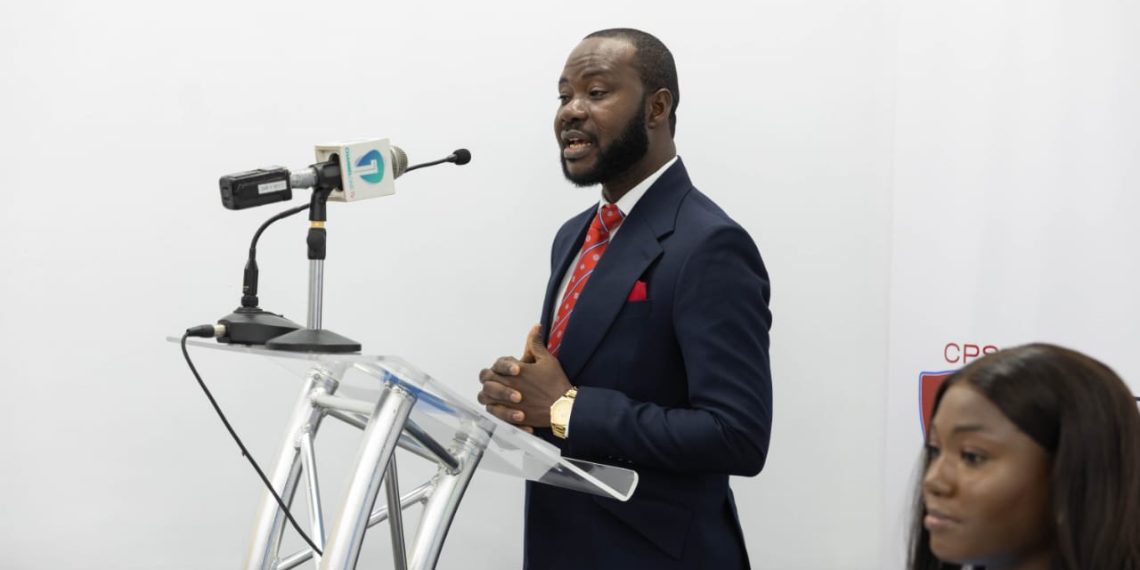
TheExecutive Director of the Centre for Policy Scrutiny, Dr. Adu Owusu Sarkodie, said the stronger fiscal numbers concealed major gaps in budget implementation.
“There is no doubting the benefits of the consolidation. The decrease in the deficit means a decrease in borrowing (as a share of GDP), fostering debt sustainability and macroeconomic stability,” he said.
“That said, because the deficit fell by a greater amount than intended, largely as a result of actual expenditure being lower than planned, the consolidation left in its wake unfulfilled budgetary allocations. Hence, many MDAs could not undertake planned capital projects or make expected progress on them.”
According to the Centre, nearly 40% of the GH¢32.7 billion earmarked for capital spending in 2025 was not used, while in the first half of 2026 about GH¢20.5 billion — equal to 27% of critical spending on goods and services, capital projects, grants and social interventions — was not released.
It said the total deficit in priority expenditures for 2025 and the first six months of 2026 stood at approximately GH¢30.7 billion. Dr. Sarkodie said the funding gaps were hampering programme delivery despite the positive fiscal headlines.
“This is a material difference, whose implication is that many government programmes are being under-delivered, resulting in reduced outputs and outcomes in relation to set targets,” he said.
“For example, 19.4% of the allocation for Big Push in 2025 was not fulfilled, and 9.0% was not in the first half of 2026. Similarly, in 2025, actual expenditure on the National Apprenticeship Programme was 45.0% below the GH¢0.3 billion allocated, while realised spending on the Adwumarura Programme was 20.0% short of the GH¢0.1 billion allocated.
This persistent implementation gap suggests a challenge in budget execution.” The Centre blamed the shortfalls partly on lower-than-projected revenue and major gaps in external project funding, pointing out that just 15.8% of anticipated foreign loans for projects in the first half of 2026 were secured.
Dr. Sarkodie called on government to pivot to stronger domestic revenue mobilisation alongside better budget execution. “The government has used an expenditure-led fiscal consolidation. There is also the need to embark on revenue-led fiscal consolidation without overburdensome the taxpayer,” he said. He further urged the Ministry of Finance to tighten implementation processes to ensure approved funds translate into finished projects and better public service delivery.


