


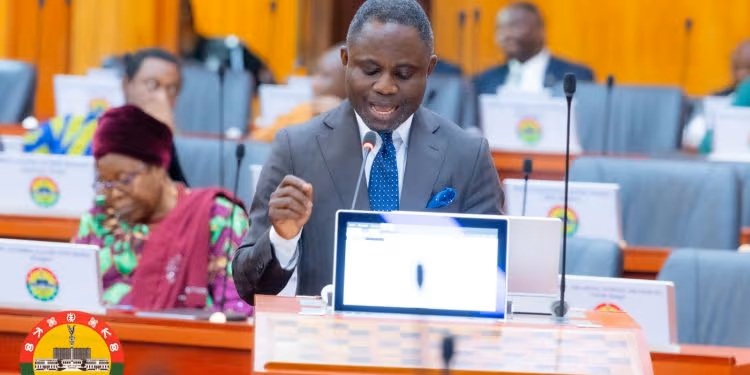
The Ministry of Health has intensified nationwide surveillance and emergency preparedness measures to protect Ghana against a potential Ebola outbreak following growing international concerns over the spread of the Bundibugyo strain of the virus.

The move comes after a high-level inspection tour led by the Minister for Health, Kwabena Mintah Akandoh, on Friday, May 29, 2026, to assess the country’s readiness to detect, contain and respond to any suspected cases.
The minister and his delegation visited key health and border security facilities, including screening points at Accra International Airport (AIA), diagnostic laboratories at the Noguchi Memorial Institute for Medical Research (NMIMR), and treatment and isolation facilities at the Ghana Infectious Disease Centre (GIDC).
The assessment focused on evaluating Ghana’s disease surveillance systems, laboratory capacity and emergency response infrastructure in light of heightened global concern over the Ebola outbreak.
Border Surveillance Strengthened
At Accra International Airport, officials reviewed passenger screening procedures, thermal scanning systems and emergency response arrangements designed to identify and isolate potential cases.
Mr. Akandoh noted that while existing screening measures remain operational, authorities are exploring more advanced digital and non-contact technologies to strengthen disease detection and minimise potential risks.
Addressing journalists after the visit, the Health Minister emphasised that public cooperation remains critical to preventing the spread of infectious diseases.
“It’s very important for all of us to cooperate. We are taking activities at the land borders seriously; if there’s any case, we’re ready. There’s no cause for panic; nobody should panic. All should adhere to the safety measures,” he said.
The minister also urged public institutions, transport operators, local authorities and event organisers to reinforce hand hygiene and sanitation practices as part of broader preventive efforts.
Noguchi Assures Government of Testing Capacity
The delegation later toured the Noguchi Memorial Institute for Medical Research, where officials assessed the country’s laboratory readiness to process suspected Ebola samples.
Director of the Institute, Professor Dorothy Yeboah-Manu, assured the government that the facility possesses the necessary expertise, equipment and laboratory reagents to conduct accurate and timely testing should any suspected cases emerge.
According to her, the institute’s biosafety laboratories remain fully equipped to support national response efforts and provide rapid diagnostic services when required.
WHO Calls for Vigilance
Also participating in the tour was the World Health Organization (WHO) Country Representative to Ghana, Dr. Fiona Braka, who stressed the importance of maintaining robust surveillance systems, particularly at border entry points.
Dr. Braka noted that the Bundibugyo strain presents unique public health challenges and urged authorities to remain vigilant while international efforts continue to develop and deploy effective vaccine interventions.
Health officials have reassured the public that no Ebola case has been confirmed in Ghana and have urged citizens to remain calm while observing recommended preventive measures.
The Ministry of Health says it will continue to monitor developments closely and work with local and international partners to ensure the country remains prepared to respond swiftly to any potential threat.


