


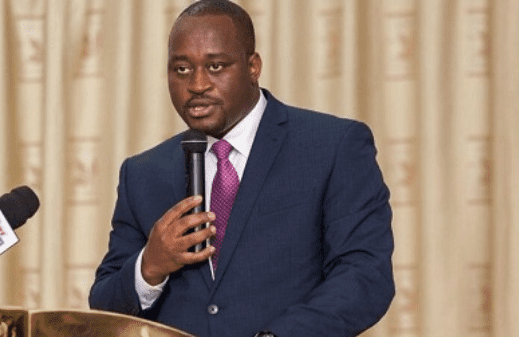
Economist and political risk analyst Theo Acheampong says Ghana is now in a stronger position to absorb global economic shocks due to improved financial buffers and a stronger external sector.

Speaking on PM Express Business Edition on Joy News on Thursday, Dr Acheampong said the global economy has become increasingly volatile, with geopolitical crises occurring more frequently.
He noted that recent global events, including the Russia–Ukraine War, triggered inflation spikes and cost-of-living pressures worldwide, affecting many economies including Ghana.
According to him, Ghana’s deep integration into the global economy means external shocks will inevitably have an impact. However, he said what matters most is how countries manage their internal economic policies.
Dr Acheampong explained that strong fiscal discipline and effective economic management are key to building resilience against global disruptions.
He recalled that Ghana’s fiscal vulnerabilities became evident during the early stages of the Russia–Ukraine crisis, when the country’s foreign reserves dropped to about two weeks of import cover.
However, he said the situation has improved significantly since then.
Recent figures from the Ministry of Finance (Ghana) and the Bank of Ghana show that the country’s import cover has risen to about 5.7 months and continues to grow.
Dr Acheampong also pointed to a positive trade balance of about $1 billion monthly and a current account surplus of roughly $750 million.
He said stronger export earnings—particularly from gold and non-traditional exports—have helped improve Ghana’s external position.
“These improvements mean Ghana is in a better position to withstand global shocks compared to a few years ago,” he said.
Despite the progress, Dr Acheampong emphasised that the country must continue strengthening its economic fundamentals to maintain stability.


