


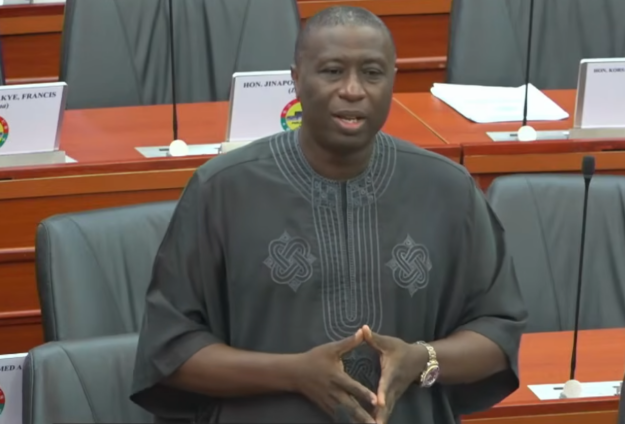
The government could face a financial liability exceeding GH¢680 million following a contract dispute between the Ghana Revenue Authority (GRA) and private firm Safaritech, the Member of Parliament for Okaikwei Central, Patrick Yaw Boamah, has disclosed.

Speaking during parliamentary debate on the 2027 Budget Statement and Economic Policy on Thursday, November 19, Mr Boamah cautioned against proposed amendments to the State Proceedings Act, 1998 (Act 555), arguing that the government should prioritise honouring contractual obligations rather than introducing measures that could restrict creditors’ ability to enforce court judgments.
The proposed amendments seek to prevent judgment creditors from attaching funds held in the Consolidated Fund and the Contingency Fund to recover debts owed by the state. They would also limit enforcement orders to the government agency directly responsible for the dispute.
Mr Boamah questioned the fairness of the proposed restrictions, particularly when public institutions continued to default on contractual commitments with private businesses. He warned that the changes could make it increasingly difficult for individuals and companies that had secured favourable court judgments against the government to obtain compensation.
“As you speak, there are a lot of judgment debts that are hanging around the neck of government. As I speak to you, GRA is saddled with a judgment debt of over GH¢680 million from Safaritech,” he told Parliament.
He urged the government and its agencies to honour agreements entered into with private companies, stressing that contractual breaches often result in costly legal disputes and additional financial obligations for the state.
“The government must respect the contracts that they enter into. State institutions must respect contracts to prevent the occurrence of judgment debt,” he added.
The proposed legislative changes form part of the government’s expenditure and financial management measures outlined in the 2027 Budget. According to the government, the restrictions are intended to protect public funds earmarked for essential services and prevent the disruption of government operations through the attachment of funds belonging to institutions not directly involved in legal disputes.
The government cited the June 2026 floods as an example, explaining that the Contingency Fund could not be accessed despite parliamentary approval because the funds had been garnisheed. The budget also highlighted concerns about government institutions having their accounts frozen over disputes involving other state agencies.
The proposals have reignited debate over the balance between protecting public resources and upholding the rights of individuals and businesses that have obtained valid court judgments against the state.
The concerns also extend to the government’s provision of GH¢100 million for judgment debt payments in the 2027 Budget. Mr Boamah questioned the allocation, seeking clarity on the specific liabilities the government expects to settle with the amount.


