


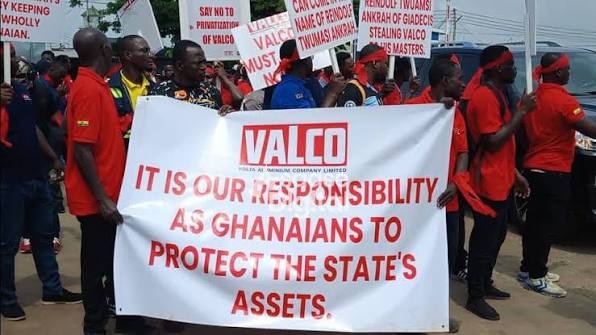
The Industrial and Commercial Workers’ Union (ICU)-Ghana has intensified its opposition to the alleged sale of the Volta Aluminium Company (VALCO), staging a protest to urge the Government to abandon any plans to transfer ownership of the state-owned aluminium producer.

The demonstration follows concerns raised by sections of VALCO’s workforce, who have maintained since January 2026 that the company is being positioned for sale under the leadership of the Chief Executive Officer of the Ghana Integrated Aluminium Development Corporation (GIADEC), Reindorf Twumasi Ankrah. The workers have also renewed calls for his dismissal.
GIADEC has repeatedly denied claims that VALCO is being sold, stating instead that it is exploring a co-ownership arrangement with a strategic private sector partner. However, the ICU says those assurances have not addressed concerns about the future of the company and the welfare of its employees.
Addressing demonstrators on Monday, 27 July, ICU-Ghana General Secretary Morgan Ayawine said the protest was aimed at protecting jobs and preserving one of Ghana’s key state-owned enterprises.
“July 27, 2026, is a great day. It is a day for the determination of our destiny as patriotic citizens of this country. We are here to determine the fate of one of the premier companies that was bequeathed by Osagyefo Dr Kwame Nkrumah to all of us,” he said.
Mr Ayawine argued that successive governments had sought to divest state-owned assets and cautioned against any similar move involving VALCO.
“It has been noticed that over the years, government after government has attempted to sell everything, and now they are at it again, and they want to sell VALCO,” he said.
He stressed that the union’s protest was motivated by the need to safeguard jobs rather than by political considerations.
“We are not here to do politics. We are not partisan politicians. We are labour unions, and our duty is to ensure that jobs are created,” he said.
GIADEC maintains that ongoing discussions are focused on attracting a strategic private investor through a co-ownership model rather than an outright sale.
However, ICU-Ghana says it will continue to oppose any arrangement it believes could undermine workers’ interests or reduce the country’s ownership of a strategic industrial asset.


