


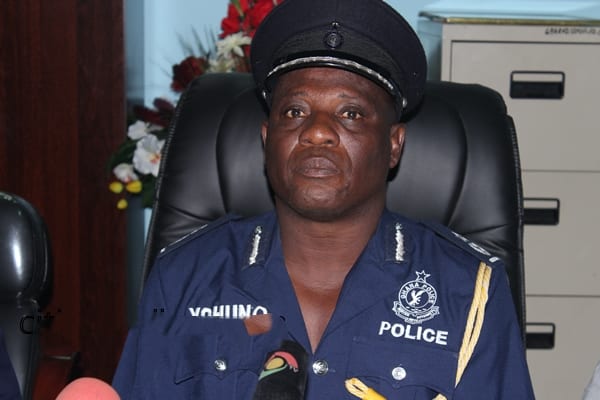
Inspector-General of Police (IGP) Christian Tetteh Yohunu has called on religious leaders to use their influence to prevent religious tensions and violence, warning that any threat to Ghana’s peace could have serious consequences for future generations.

Speaking at an engagement with religious leaders at the National Police Headquarters on Friday, August 14, the IGP said Christian and Muslim leaders had a critical role to play in maintaining peace, particularly at a time when inflammatory speech and actions could easily escalate tensions.
Mr Yohunu cautioned citizens against taking the law into their own hands when they believe an offence has been committed, insisting that such matters must be reported to the appropriate state institutions.
“No civilised society can survive when individuals take the law into their own hands. When a citizen believes a crime or an offence has been committed, the only righteous path is to report it to statutory authorities and trust the legal process,” he said.
The IGP also stressed the importance of protecting freedom of religion and freedom of expression, while emphasising that these rights do not provide justification for violence or unlawful attacks against others.
“Every individual has a right to practice their faith without fear of violence,” he said.
Mr Yohunu noted that although speech that incites religious hatred is restricted under Article 20 of the International Covenant on Civil and Political Rights (ICCPR), allegations of criminal conduct must still be addressed through lawful procedures.
He stressed that no person suspected of an offence, whether in state custody or in a public space, should be subjected to torture, cruel treatment or assault.
The IGP consequently appealed to Christian and Muslim leaders to use their platforms to calm tensions and discourage their congregations, particularly young people, from resorting to violence.
“Our revered clergy and the imams, our beloved chief imam, they listen to your sermons, read your social media posts, and follow your gestures,” he said.
According to Mr Yohunu, the influence of religious leaders could either help prevent conflict or intensify tensions, depending on the messages they communicate to their followers.
“At this fragile moment, your words can either act as water upon an emerging fire or as petrol upon dying embers,” he said.
He called on religious leaders to make interfaith harmony, self-control and the dangers of religious conflict central themes in their sermons.
“I ask three key commitments from you today. Dedicate your Friday sermons in Islam and Sunday sermons strictly to messages of interfaith harmony, self-control, and the danger of religious conflict,” he urged.
Mr Yohunu also asked religious leaders to remind their congregations of the broader consequences of violence, particularly its potential impact on future generations.
“Remind your congregations that an attack on the peace of Ghana is an attack on the future of their own children,” he said.
He further called for visible cooperation between Christian and Islamic leaders as a demonstration of national unity and a means of countering attempts to exploit religious differences.
“Let the public see Christians and Islamic leaders standing together, sharing meals, issuing joint statements, and walking through our communities hand-in-hand,” he said.
The IGP said such cooperation was particularly important in reaching young people, who may be vulnerable to messages that portray religious differences as grounds for division or confrontation.
He urged religious leaders to teach their congregations that reporting alleged offences to the appropriate authorities, rather than seeking personal or communal retaliation, is both responsible citizenship and consistent with the values of peaceful religious coexistence.


