


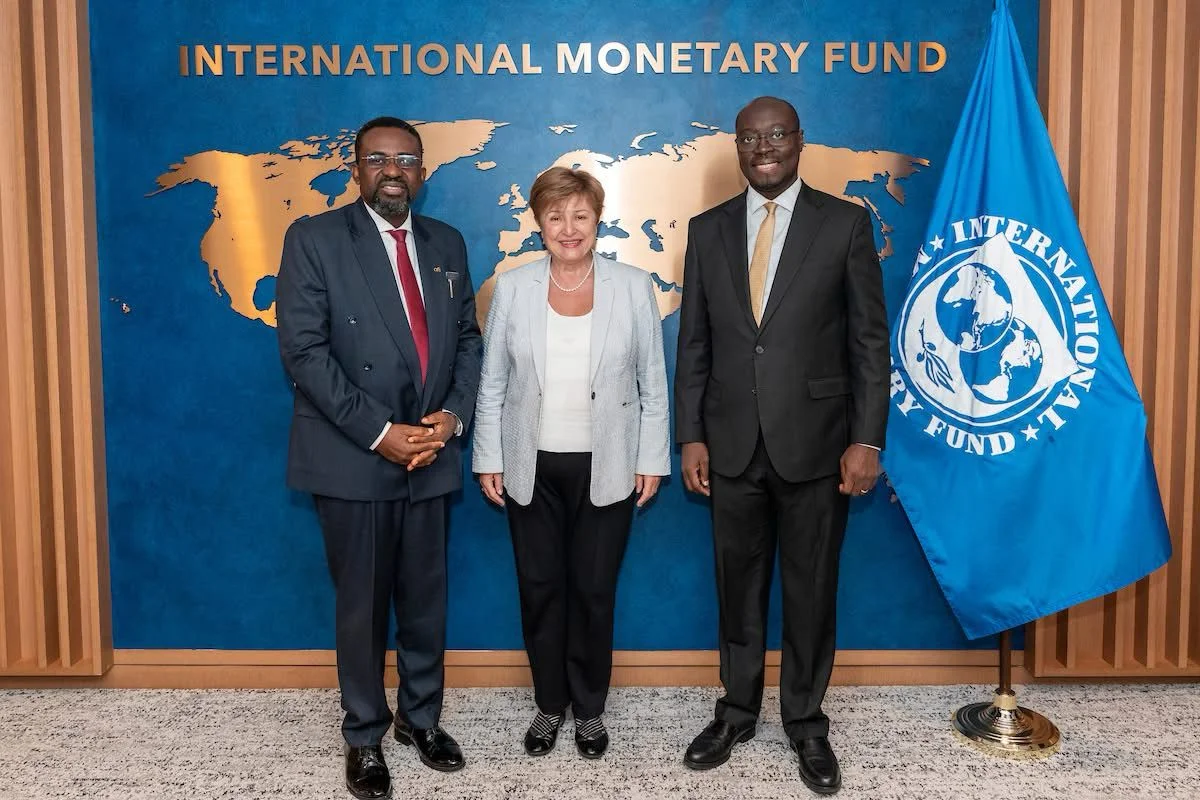
The Executive Board of the International Monetary Fund (IMF) is expected to meet today to consider Ghana’s sixth and final review under the Extended Credit Facility (ECF) programme.

If approved, the review will unlock a final disbursement of approximately US$318 million for Ghana, marking the conclusion of the country’s three-year IMF-supported programme.
The Board is also expected to consider Ghana’s request for a 36-month Policy Coordination Instrument (PCI), a non-financing arrangement that will guide the country’s economic reforms after the ECF programme ends.
Unlike the ECF, the PCI does not provide direct funding. Instead, it supports closer policy engagement with the IMF and is intended to help countries maintain macroeconomic stability, strengthen resilience to external shocks, address structural imbalances and support sustainable economic growth.
The Board meeting follows a staff-level agreement reached in April after an IMF mission to Accra. Government has since met the quantitative and structural targets required for Board consideration, including decisions on the recapitalisation and governance reforms of UMB Bank and Prudential Bank, as well as other agreed prior actions.
Earlier this year, IMF Mission Chief for Ghana, Dr Ruben Atoyan, said the final disbursement of more than US$318 million would be released to the Bank of Ghana once the Executive Board approves the review.
Government Prepares for PCI Programme
Finance Minister Dr Cassiel Ato Forson has said Ghana is preparing to transition from the ECF programme to the PCI to sustain recent macroeconomic gains and deepen structural reforms.
Presenting the 2026 Mid-Year Budget Review, he said the PCI would focus on six priority areas: growth-friendly fiscal consolidation, debt sustainability, fiscal transparency and governance, stronger monetary and exchange rate policy frameworks, financial sector stability, and economic diversification.
According to the Finance Minister, the programme is intended to preserve the gains achieved under the IMF-supported reforms while reinforcing investor confidence and policy credibility.
Background
An IMF staff team led by Dr Ruben Atoyan visited Accra from 29 April to 15 May for Ghana’s 2026 Article IV consultation, the sixth and final review of the ECF programme, and discussions on the country’s request for a PCI.
At the end of the mission, the IMF said Ghana had recorded substantial stabilisation gains, including lower inflation, stronger international reserves, improved confidence in the cedi and progress in debt restructuring.
The Fund also urged the government to continue reforms in the energy sector, particularly efforts to improve efficiency at the Electricity Company of Ghana through private sector participation.
Ghana entered the 36-month ECF arrangement in May 2023, with access to approximately US$3 billion to support macroeconomic stability, fiscal reforms and the country’s debt restructuring programme.


