


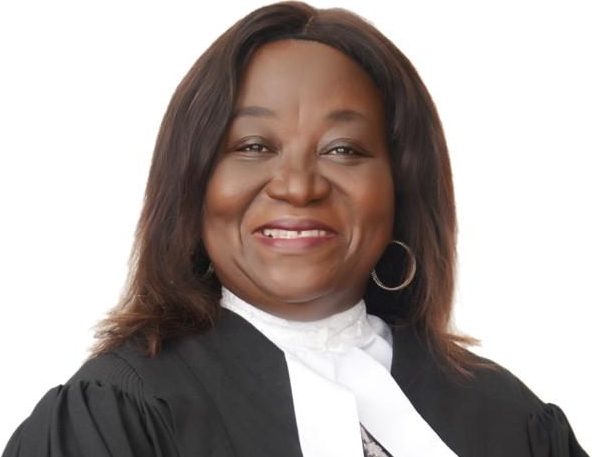
Managing legal practitioner Gloria Ofori-Boadu of GOB Law Consult has criticised the Ghana Education Service’s (GES) disciplinary framework for handling cases of sexual misconduct involving teachers and students, arguing that current sanctions are inadequate and fail to provide meaningful protection for children.

Speaking on Newsfile on Saturday, Ms Ofori-Boadu questioned why teachers found to have engaged in sexual relationships with students are primarily dealt with through professional disciplinary measures rather than facing stronger legal consequences.
Under the GES Code of Conduct, any staff member who has carnal knowledge of a student—regardless of age, gender or consent—is deemed guilty of professional misconduct.
However, Ms Ofori-Boadu argued that the classification does not go far enough.
“Why does it end there?” she asked. “Professional misconduct alone is not enough.”
Calls for Stronger Sanctions
The legal practitioner took particular issue with the practice of interdiction, under which teachers accused of misconduct are temporarily removed from active duty and placed on half salary pending investigations.
Under the current framework, a teacher who is cleared of wrongdoing may return to work, while those found guilty are subjected primarily to professional sanctions.
“Interdiction is ridiculous. Please. There must be some more strenuous efforts on the part of GES to protect our children,” she said.
According to Ms Ofori-Boadu, sexual abuse involving students should attract consequences that extend beyond the revocation of a teaching licence or administrative sanctions.
She argued that stronger deterrent measures are necessary to protect vulnerable children and discourage future misconduct.
Need for Early Child Protection Education
Beyond disciplinary measures, Ms Ofori-Boadu also highlighted what she described as a broader failure to adequately educate children about their rights, personal safety and boundaries from an early age.
She recounted an experience during a visit to a primary school in the suburbs of Accra, where a Class One pupil unexpectedly raised concerns about inappropriate behaviour by adult men in her community.
According to Ms Ofori-Boadu, the child later disclosed that some married men living in her compound had approached her while she was on her way to use the bathroom.
“We were so horrified,” she recalled.
She said the incident underscored the reality that many children are exposed to sexual threats at an early age and reinforced the need for structured child protection education throughout the school system.
Counsellors Needed in Schools
Ms Ofori-Boadu called on the Ghana Education Service to invest in trained counsellors who can regularly engage students on issues relating to personal safety, abuse prevention and their rights.
She argued that such interventions should begin from kindergarten and continue through to senior high school.
“Get counsellors to talk to the children, educate them,” she urged.
According to her, early guidance and support can help prevent trauma and ensure children grow into confident and emotionally healthy adults.
“We can have adults who are well formed to benefit our society when they grow up—not people who are traumatised, who are in pain, who are bitter, who are crying from childhood neglect,” she said.
Comments Follow Bole SHS Incident
Her remarks come in the wake of a recent controversy involving a teacher at Bole Senior High School in the Savannah Region.
The Ghana Education Service recently interdicted the teacher after a video circulated on social media allegedly showed him engaged in a sexual encounter with a female student in the school’s science laboratory.
The GES has since reiterated its zero-tolerance policy on sexual misconduct involving students.
However, the Service has not publicly indicated whether the matter has been referred to law enforcement agencies for possible criminal investigation and prosecution.
The incident has reignited debate about child protection policies within educational institutions and whether existing disciplinary procedures are sufficient to address sexual misconduct involving teachers and students.


